
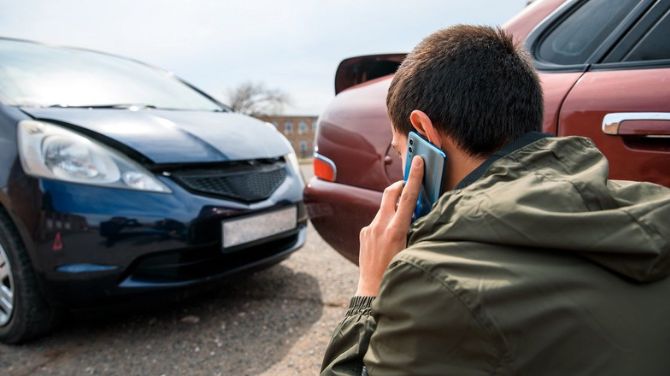
Determining the fault in a reversing accident under UK laws is often straightforward because the person reversing usually carries the most responsibility. When you perform a reversing manoeuvre, you must ensure your path is entirely clear of other vehicles, people, and obstacles. Failing to check your surroundings properly often leads to a clear finding of driver negligence in reversing accident scenarios. While rare exceptions exist, UK insurers almost always place the blame on the driver who was moving backwards. This guide explains how to navigate these common claims and understand your legal position on the road.
1. The General Rule of Reversing Liability
In the UK, the Highway Code clearly states that you must only reverse when it is safe to do so. The responsibility lies entirely with the reversing driver to observe the road and ensure no collisions occur. This fundamental principle means that reversing car accident liability frequently falls on the person performing the movement. Even if the other vehicle was moving or stationary, you are expected to yield until the way is completely free. Consequently, challenging a fault decision after hitting someone while reversing is incredibly difficult for most motorists.
2. When Is the Reversing Driver Not at Fault?
While liability usually rests with the reversing driver, certain specific situations might shift the balance. For example, if you were already in the process of reversing and another vehicle suddenly speed-crashed into you, the fault might be shared. If the other driver was performing a dangerous act, such as speeding or ignoring clear road signs, they could bear some blame. However, proving these circumstances requires strong evidence, like dashcam footage or reliable, independent eyewitness accounts. Without clear evidence, insurers will likely default to the standard insurance fault determination UK protocols that hold the reversing driver accountable.
3. Understanding Insurance Fault Determination
Insurance providers follow strict industry-standard protocols to assess claims and settle disputes after a parking lot bump. They look at the position of the vehicles, impact points, and any available evidence provided by the drivers. In most parking and reversing collision claims, the insurer will look to settle quickly by finding the reversing driver liable. This is because the reversing driver had the duty to avoid the collision, regardless of what the other car was doing. Being prepared with photos of the scene and driver details is vital for protecting your position.
4. Negligence and the Duty of Care
All drivers have a duty of care to ensure they do not endanger others while driving. Reversing is considered a high-risk manoeuvre because your vision is restricted compared to driving forward. Demonstrating a failure to check blind spots or using mirrors incorrectly constitutes clear driver negligence, reversing accident behaviour. Insurers will investigate whether you took all reasonable precautions before starting your movement. If you were distracted by a phone or passengers, this further cements the case for your full liability.
5. Common Scenarios and Their Typical Outcomes
| Scenario | Typical Liability Outcome |
| Reversing out of a driveway | The reversing driver is almost always held at fault. |
| Both vehicles are reversing simultaneously | Liability is usually split 50/50 between the two drivers. |
| A stationary car was hit by a reversing car | The reversing driver carries 100% of the fault. |
| A car hits a reversing vehicle | The reversing driver is usually liable unless speeding is proven. |
6. How to Protect Your Position After a Collision
If you find yourself involved in a reversing collision, stay calm and follow these essential steps. Immediately exchange insurance details with the other driver and document the damage with clear, close-up photos. If there are people around, ask for their contact details to serve as potential witnesses. Always report the incident to your insurance provider honestly and promptly, providing all the evidence you have collected. Clear documentation is your best defence when dealing with the complex road traffic accident fault rules that dictate insurance payouts.
7. Preventing Future Accidents Through Better Habits
Most reversing accidents happen because drivers are in a rush or fail to use their mirrors correctly. Always walk around your vehicle if you are unsure about obstacles hidden behind your boot area. Take extra time to check your left and right blind spots before shifting your gear stick. Modern reversing sensors and cameras are excellent tools, but they should never replace basic physical mirror checks. Being mindful of these simple steps significantly lowers your risk of being at fault in reversing accident UK statistics.
Conclusion
Reversing safely requires constant vigilance and an understanding of your legal responsibilities on the road. Remember that in the UK, the reversing driver is almost always deemed responsible for any collisions. By maintaining awareness and documenting every detail, you can handle the insurance claims process much more effectively. Always prioritise road safety over speed to prevent the stress of a potential accident. Following these simple guidelines helps ensure you remain compliant with road traffic accident fault rules and protect your no-claims bonus.
FAQs
1. Who is usually responsible for a reversing accident?
In the vast majority of cases, the driver performing the reversing manoeuvre is held responsible for the collision. This is because they have a legal duty to ensure their path is clear before moving backwards. You should always expect to be at fault in reversing accident UK scenarios unless you have proof of the other driver’s extreme recklessness.
2. Can I share the blame if the other driver was also moving?
If both drivers were reversing at the same time, liability is typically shared equally at a 50/50 split. Both parties failed to maintain a proper lookout, which is a key part of road traffic accident fault rules. It is very difficult to argue that one driver was entirely innocent in a dual-reversing situation.
3. What evidence helps when disputing a reversing accident claim?
Dashcam footage is the most powerful tool for proving your version of events during a claim. Independent witness statements and clear photographs of the impact points also support your insurance fault determination UK assessment. Without concrete evidence, insurers usually rely on the assumption that the reversing driver failed to check their surroundings.
4. Does hitting a parked car always make me 100% liable?
Yes, hitting a stationary vehicle while you are moving means you are almost certainly fully responsible. A parked car has no way of avoiding you, so the entire duty of care rests with you. This is a classic example of parking and reversing collision claims where the liability is nearly impossible to dispute.
5. Why do insurers often blame the reversing driver so quickly?
Insurers rely on the principle that the driver in motion backwards has the ultimate responsibility to avoid hazards. The laws and road traffic accident fault rules favour the driver who was not performing a high-risk manoeuvre. Therefore, they process these claims based on the standard assumption of the reversing driver’s duty.
6. What counts as driver negligence during a reversing accident?
Negligence occurs when you fail to check your blind spots, mirrors, or surroundings adequately before reversing. Distractions like using a mobile phone or being careless are also prime examples of driver negligence reversing accident behaviour. If you did not observe the road correctly, your insurance provider will deem you responsible for any damage caused.
7. How does a parking sensor failure affect my insurance claim?
The failure of electronic sensors does not excuse the driver from their primary responsibility to check mirrors. Insurers still regard the driver as fully liable because parking technology is considered an optional aid. Relying on sensors rather than your own eyes is often cited in cases of driver negligence reversing accident reports.
8. Will my insurance premium increase after a reversing accident?
Most insurance companies will increase your premiums if you are found at fault for an accident. Being held responsible for a fault in a reversing accident UK claim often leads to a loss of your no-claims discount. It is always best to check your specific policy terms to understand the financial impact of a claim.
9. What should I do if the other driver refuses to give details?
If the other driver refuses to cooperate, make sure to take photos of their vehicle and registration plate. Contact the police if you feel threatened, as they can help manage the aftermath of parking and reversing collision claims. Documenting their car details ensures your insurance provider can track them down effectively to settle the dispute.
10. Can I appeal an insurance company’s fault decision?
You can appeal a decision by providing new evidence or questioning the logic behind their assessment. However, successfully overturning a liability finding for reversing car accident liability is extremely difficult without clear proof of the other driver’s wrongdoing. Most insurers have a formal complaints process that you can use to escalate your disagreement.