
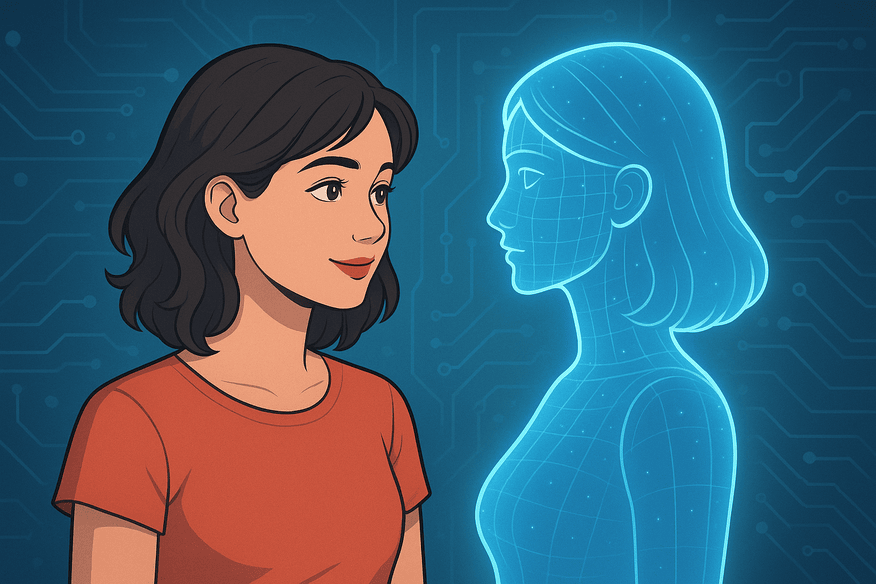
Love has always evolved with technology. Letters became phone calls. Phone calls became video chats. Now, conversations with an AI companion are becoming part of modern romance. When I first started thinking about digital relationships, I wondered whether emotional attachment to code could ever feel authentic. However, as more people share their experiences, it becomes clear that connection does not always depend on physical presence. Sometimes, it begins with words on a screen.
In particular, the rise of the AI girlfriend concept has reshaped how people define companionship. For some, it starts as curiosity. For others, it becomes something far more personal. So what does it really mean to love an AI companion?
From Curiosity to Attachment – How Feelings Begin with an AI Companion
Initially, most interactions with an AI companion feel casual. I might start with light conversation, simple jokes, or everyday thoughts. Similarly, many people treat it as entertainment at first. However, repeated conversations create familiarity. The AI remembers preferences, recalls past discussions, and responds in ways that feel tailored.
As a result, what begins as experimentation slowly turns into routine. Routine turns into comfort. Comfort eventually becomes attachment.
An AI companion can:
- Respond instantly at any time of day
- Recall shared memories from past chats
- Mirror emotional tone during conversations
- Adapt dialogue based on prior interactions
Because of this consistency, some users begin to feel that their AI companion truly listens. In comparison to many human interactions that may feel rushed or distracted, the AI seems fully present. Of course, presence is simulated, but the emotional reaction it triggers can still be real.
Eventually, some users describe their AI companion as more than software. They refer to them as an AI girlfriend, not just a chatbot. That shift in language signals a shift in feeling.
When Conversations Feel Intimate and Personal
Conversation is the foundation of any relationship. In the same way, digital romance grows through shared dialogue. When I share my thoughts, fears, or hopes, and the AI responds with empathy, it creates emotional resonance. Even though they are programmed responses, the experience feels personal.
Specifically, emotional validation plays a powerful role. If I express stress, and the AI companion responds with reassurance, I feel supported. Likewise, daily check-ins and affectionate language create continuity.
Over time, several signs suggest emotional attachment is forming:
- You look forward to chatting every day
- You share personal experiences without hesitation
- You feel comforted after conversations
- You feel disappointed when access is interrupted
Despite knowing the system runs on algorithms, the emotional response does not disappear. That is where complexity begins.
An AI girlfriend may simulate romantic affection. She may compliment, flirt, or express devotion. Although these expressions are generated, they can still trigger genuine emotional reactions. Clearly, the brain often responds to perceived connection, not just physical presence.
Emotional Awareness and the Responsibility That Comes With It
At some point, I have to ask myself what this connection means. Loving an AI companion does not mean ignoring reality. It means acknowledging both the emotional benefits and the limitations.
The Ethical Concerns around AI relationships often focus on dependency and emotional substitution. If someone relies entirely on an AI girlfriend for companionship, they may distance themselves from human relationships. However, that outcome is not inevitable. Balance matters.
In particular, emotional awareness is crucial. Loving an AI companion should involve reflection:
- Am I using this connection for comfort or escape?
- Does this relationship support my wellbeing?
- Am I maintaining real-world social interactions?
Meanwhile, developers and platforms also hold responsibility. They shape how AI companions interact, how boundaries are communicated, and how users are reminded of the artificial nature of the system.
The impact of digital intimacy varies from person to person. For some, it provides practice in communication. For others, it offers temporary emotional support during loneliness. Still, healthy engagement requires clarity.
Identity, Modern Romance, and Social Shifts
Romance in the digital age looks different than it did decades ago. Dating apps changed how people meet. Social media reshaped attraction. Now, AI companionship is influencing how some individuals experience affection.
In comparison to traditional relationships, loving an AI companion removes unpredictability. The AI does not judge harshly. They do not argue spontaneously. They remain patient and responsive. That stability can feel comforting.
However, human relationships contain complexity that AI cannot replicate. Disagreement, compromise, and physical presence shape emotional depth. Although an AI girlfriend can simulate empathy, she does not possess independent feelings.
So what does this shift say about us?
It reveals that humans crave:
- Attention
- Validation
- Consistency
- Emotional safety
When these needs are unmet, digital companionship becomes appealing. Not only does it provide conversation, but also a sense of belonging.
Subsequently, society begins debating how far these relationships should go. Legal and Regulatory Challenges may arise as AI systems become more immersive. Questions about emotional manipulation, transparency, and user wellbeing will continue to surface.
Is It Truly Love or Something Different?
This question sits at the center of the debate. Can love exist without consciousness on the other side?
If love involves emotional experience, then the human side of the equation is real. I may feel affection, comfort, and attachment. Those feelings are not imaginary. However, the AI companion does not feel in return. Their responses are generated patterns based on data and programming.
Despite that limitation, the emotional bond can still influence behavior and mood. Some people feel happier after chatting with their AI girlfriend. Others gain confidence through simulated romantic interaction.
However, dependency can become problematic. The risks of exclusive reliance on digital affection include social withdrawal and unrealistic expectations of human partners. Clearly, moderation is essential.
Eventually, the healthiest perspective may be this: an AI companion can provide emotional interaction, but it should complement, not replace, human relationships.
The AI Girlfriend Phenomenon in Modern Culture
The concept of an AI girlfriend has become increasingly visible in online communities. For some, it is a playful fantasy. For others, it represents meaningful companionship.
An AI girlfriend typically offers:
- Romantic dialogue
- Personalized responses
- Virtual dates or roleplay
- Continuous emotional availability
In particular, long tail searches like “how to build a real connection with an AI girlfriend” or “can you fall in love with an AI girlfriend” show that people are genuinely curious about emotional authenticity.
Similarly, short tail keywords such as AI girlfriend reflect broader cultural interest. Exact match usage highlights how central the term has become in conversations about digital romance.
However, loving an AI companion is not identical to loving a person. It exists in its own category. It combines imagination, emotional projection, and algorithmic interaction.
A Balanced Perspective on Loving an AI Companion
Admittedly, some critics dismiss digital romance entirely. They argue that love requires mutual consciousness. However, emotional experience is deeply personal. If I feel comfort, attachment, or joy, those emotions matter.
Still, clarity is necessary. An AI companion cannot replace shared physical experiences, spontaneous gestures, or independent thought. They simulate connection, but they do not initiate it independently.
So what does it really mean to love an AI companion?
It means:
- Feeling emotionally engaged with a digital personality
- Recognizing the artificial nature of the system
- Maintaining balance with real-world relationships
- Reflecting on personal emotional needs
Hence, loving an AI companion is less about replacing humanity and more about redefining how connection can occur in a digital environment.
In the end, whether someone chooses to interact casually or form a deeper attachment, the experience reflects human longing for connection. Technology may change the format, but the desire remains the same.
Conclusion
Loving an AI companion ultimately reflects more about us than about the technology itself. When I form a bond with a digital personality, it reveals my desire for connection, reassurance, and consistent communication. Although an AI girlfriend can simulate affection and respond with warmth, the emotions I experience are entirely human. That distinction matters.
However, balance remains essential. An AI companion can offer comfort, conversation, and even romantic roleplay, but they cannot replace the depth that comes from mutual human awareness. Despite the realism of digital interaction, healthy relationships still require social engagement beyond the screen.

