Mixing is one of the most important processes in manufacturing industries. Whether producing food products, chemicals, pharmaceuticals, fertilizers, or construction materials, achieving a consistent and uniform mixture directly impacts product quality and operational efficiency.
With numerous mixing technologies available, manufacturers often face the challenge of choosing between a Ribbon Mixer and conventional mixing systems. While traditional mixers continue to be used in various applications, ribbon mixers have become increasingly popular due to their efficiency, versatility, and ability to produce highly uniform blends.
This article compares a Ribbon Mixer with conventional mixers to help manufacturers determine which solution delivers the best results for their specific production requirements.
Understanding Industrial Mixing
Industrial mixing involves combining two or more materials to create a homogeneous blend. The effectiveness of the mixing process influences:
- Product consistency
- Quality control
- Production efficiency
- Ingredient distribution
- Manufacturing costs
The choice of mixer can significantly affect these outcomes, making equipment selection an important business decision.
What Is a Ribbon Mixer?
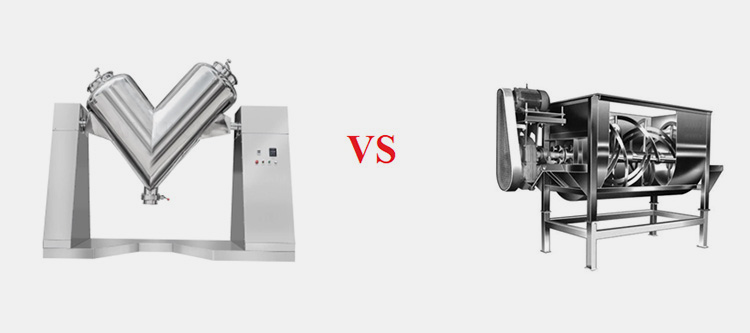
A Ribbon Mixer is a horizontal mixing machine that uses specially designed inner and outer helical ribbons mounted on a rotating shaft.
As the ribbons rotate, materials move in opposite directions simultaneously:
- The outer ribbon moves materials toward the center.
- The inner ribbon moves materials toward the ends.
This continuous movement creates a highly efficient mixing action that ensures uniform blending throughout the batch.
Ribbon mixers are widely used in industries that process:
- Powders
- Granules
- Dry ingredients
- Chemical compounds
- Food products
- Animal feed
- Construction materials
Their versatility makes them one of the most commonly used industrial mixing solutions.
What Are Conventional Mixers?
The term conventional mixers generally refers to traditional mixing systems such as:
- Paddle mixers
- Drum mixers
- Vertical mixers
- Batch agitators
- Standard blending equipment
These systems have been used for many years and remain suitable for certain applications. However, their performance can vary depending on material characteristics and production requirements.
Understanding the strengths and limitations of both options is essential when comparing mixing solutions.
Mixing Efficiency Comparison
One of the primary factors manufacturers evaluate is mixing efficiency.
Ribbon Mixer Performance
A Ribbon Mixer is specifically designed to achieve rapid and uniform blending.
Its dual-ribbon design allows materials to move continuously in multiple directions, resulting in:
- Faster mixing cycles
- Better ingredient distribution
- Improved batch consistency
- Reduced processing time
This efficient movement helps eliminate dead zones where materials may remain unmixed.
Conventional Mixer Performance
Traditional mixers may perform adequately for simple applications, but they often require longer mixing times to achieve similar levels of uniformity.
Depending on the design, conventional mixers may experience:
- Uneven blending
- Material segregation
- Reduced mixing efficiency
- Longer production cycles
For applications requiring precise ingredient distribution, ribbon mixers often provide superior performance.
Product Consistency and Uniformity
Consistency is critical in industries where product quality standards are strict.
Advantages of a Ribbon Mixer
A Ribbon Mixer provides excellent blending accuracy by ensuring all materials are distributed evenly throughout the batch.
This is especially important for products that contain:
- Multiple ingredients
- Additives
- Flavorings
- Active compounds
Uniform mixing helps improve product quality and reduce variability between batches.
Conventional Mixers
Some conventional mixers may struggle to achieve the same level of consistency, particularly when processing fine powders or materials with varying densities.
As a result, manufacturers may experience greater batch-to-batch variation.
Processing Time
Production speed directly impacts overall operational efficiency.
Ribbon Mixer Advantages
A Ribbon Mixer is known for its ability to process materials quickly while maintaining excellent mixing quality.
Benefits include:
- Reduced mixing times
- Increased production capacity
- Improved workflow efficiency
- Higher output levels
Shorter processing cycles help manufacturers meet growing production demands.
Conventional Mixers
Traditional mixing equipment often requires longer operating times to achieve comparable results, which can reduce overall productivity.
Versatility Across Industries
Industrial facilities often process a variety of materials.
Ribbon Mixer Applications
A Ribbon Mixer can efficiently handle:
- Powders
- Granules
- Dry blends
- Chemical ingredients
- Food products
- Animal feed formulations
Its flexibility allows manufacturers to use a single machine for multiple applications.
Conventional Mixers
Many conventional mixers are designed for specific material types and may not perform equally well across diverse production requirements.
This can limit operational flexibility.
Energy Efficiency
Energy consumption plays a significant role in operating costs.
Ribbon Mixer Benefits
Modern Ribbon Mixer systems are designed to maximize mixing performance while minimizing energy usage.
Because they achieve uniform mixing more quickly, they often consume less energy per batch.
This contributes to:
- Lower operating costs
- Improved sustainability
- Greater production efficiency
Conventional Mixers
Longer processing times can result in higher energy consumption, increasing overall production expenses.
Ease of Maintenance
Maintenance requirements affect equipment reliability and production uptime.
Ribbon Mixer Maintenance
A Ribbon Mixer generally features a simple and durable design with relatively few moving parts.
This can result in:
- Easier cleaning
- Simplified inspections
- Reduced maintenance costs
- Longer equipment lifespan
Routine maintenance helps ensure consistent performance over time.
Conventional Mixers
Some traditional mixing systems may require more frequent maintenance due to complex designs or higher wear rates.
This can increase downtime and maintenance expenses.
Product Quality Improvements
Manufacturers invest in advanced equipment primarily to improve product quality.
A Ribbon Mixer helps achieve:
- Uniform ingredient distribution
- Consistent product characteristics
- Better quality control
- Reduced product rejection rates
These advantages are particularly valuable in industries where quality standards are tightly regulated.
Cost Considerations
Equipment cost is often a major factor in purchasing decisions.
Initial Investment
A Ribbon Mixer may involve a higher initial investment compared to some conventional mixing systems.
However, manufacturers should consider long-term benefits rather than focusing solely on upfront costs.
Long-Term Value
The efficiency gains associated with ribbon mixers can result in:
- Lower labor costs
- Reduced energy consumption
- Improved productivity
- Better product quality
- Reduced waste
These benefits often provide a strong return on investment over time.
Industries That Commonly Use Ribbon Mixers
Because of their efficiency and reliability, ribbon mixers are widely used in:
- Food processing
- Pharmaceutical manufacturing
- Chemical production
- Agriculture
- Animal feed production
- Construction materials manufacturing
Their adaptability makes them suitable for both small-scale and large-scale operations.
When a Conventional Mixer May Be Suitable
Although a Ribbon Mixer offers numerous advantages, conventional mixers may still be appropriate in certain situations.
Examples include:
- Small production volumes
- Specialized mixing requirements
- Budget-sensitive projects
- Applications involving liquids rather than dry materials
The best choice ultimately depends on specific production needs.
Key Factors to Consider Before Choosing
When evaluating mixing equipment, manufacturers should assess:
- Material characteristics
- Batch size requirements
- Production volume
- Desired mixing quality
- Maintenance expectations
- Energy efficiency goals
- Future expansion plans
Careful evaluation helps ensure the selected equipment aligns with business objectives.
Conclusion
When comparing a Ribbon Mixer with conventional mixing systems, ribbon mixers often deliver superior performance in terms of mixing efficiency, product consistency, processing speed, and operational flexibility. Their ability to produce highly uniform blends while reducing production time makes them a preferred choice across many industries.
Although conventional mixers may still be suitable for certain applications, businesses seeking higher productivity, improved product quality, and long-term operational value often find that a Ribbon Mixer provides the best overall results. By carefully assessing production requirements and operational goals, manufacturers can select the mixing solution that supports sustainable growth and manufacturing excellence.