
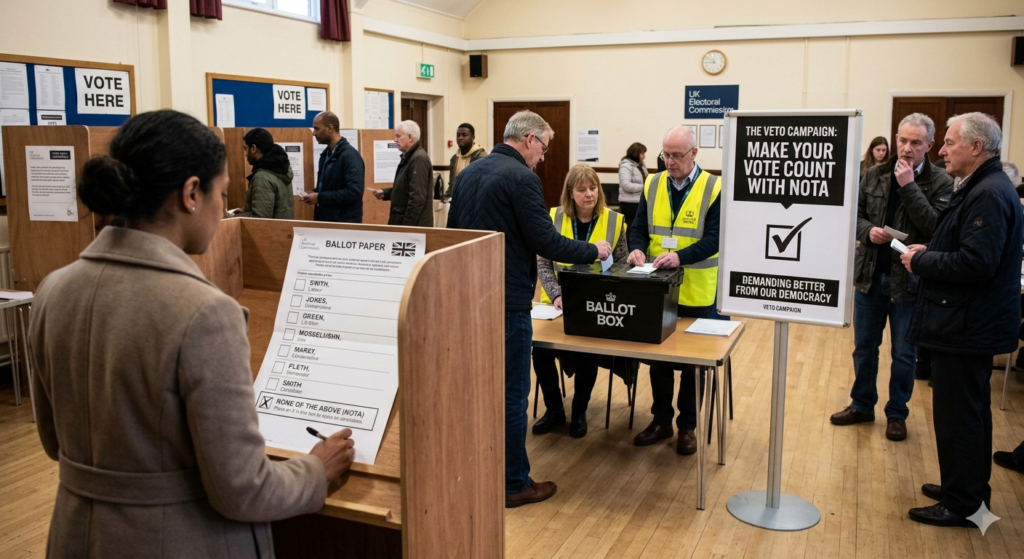
The United Kingdom’s democratic system is often described as one of the most stable in the world. However, beneath the surface of traditional polling stations and red-and-white ballot papers, a significant portion of the electorate feels increasingly disenfranchised. For many, the choice between candidates feels less like a selection of the best and more like a tactical decision to avoid the worst. This has led to a surge in interest regarding the “None of the Above” (NOTA) ballot option—a mechanism that would allow voters to formally record their dissatisfaction with all available choices.
While the UK currently allows for “spoilt ballots,” this informal method of protest is often lumped in with accidental errors, diluting its political message. Introducing a formal NOTA option would change the landscape of British elections, turning silence into a powerful, measurable statement.
Understanding the “Nota” Concept
At its core, a NOTA option on a ballot paper is a formal choice that allows a voter to indicate that they do not support any of the candidates listed. It is not merely a “blank” vote; it is a deliberate expression of “no confidence.”
The Difference Between Spoiling a Ballot and NOTA
Currently, in UK General and local elections, voters who feel unrepresented may choose to “spoil” their ballot by writing a message across it or ticking every box. While these are counted as “rejected” ballots, they are not categorized by intent. A formal NOTA option provides a clear, statistical metric for dissatisfaction. It separates those who made a mistake from those who are making a conscious political stand.
International Precedents
The concept of NOTA is not a new or radical idea globally. India introduced a NOTA button on electronic voting machines in 2013, and several US states, most notably Nevada, have utilized “None of these candidates” options for decades. These examples show that providing an “out” for voters does not collapse the system; rather, it provides a safety valve for public frustration.
Why the UK Needs a NOTA Option
The introduction of NOTA in the UK could address several systemic issues within the “First Past the Post” system and the general decline in political engagement.
Boosting Voter Turnout
One of the primary arguments for NOTA is that it encourages people to actually go to the polling station. Many eligible voters stay home because they feel that none of the candidates deserve their support. By providing a NOTA option, these individuals are given a reason to participate. High turnout is a hallmark of a healthy democracy, even if that turnout includes a high volume of protest votes.
Promoting Genuine Candidate Accountability
If NOTA were to “win” a seat or receive a significant percentage of the vote, it would send an undeniable signal to political parties. It would force them to reconsider their platforms, their candidate selection processes, and their engagement with the local community. It moves the conversation from “How do we beat the other party?” to “How do we actually win the approval of the people?”
Ending Tactical Voting
The UK’s current system often forces voters into “tactical voting”—choosing a candidate they don’t particularly like just to keep out a candidate they like even less. NOTA offers a way out of this “lesser of two evils” trap. It allows a voter to remain true to their principles without being forced to validate a candidate who does not represent their values.
The Practical Mechanics of a UK NOTA Ballot
Implementing NOTA would require more than just adding a box to a piece of paper; it requires a legal framework to determine what happens if NOTA receives the most votes.
What Happens if NOTA Wins?
This is the most debated aspect of the proposal. There are two main schools of thought:
The Symbolic Approach: NOTA is recorded, and the candidate with the next highest number of votes is elected. While symbolic, this still provides a powerful data point for future campaigning.
The Procedural Approach: If NOTA wins, the election is declared void, and a secondary election must be held with entirely new candidates. This is the more radical “binding” version of NOTA that many activists argue is necessary for true accountability.
Impact on Minority Parties
Critics often argue that NOTA might steal votes from smaller, alternative parties. However, proponents argue that NOTA serves a different purpose. While a minority party represents a specific (albeit small) vision, NOTA represents a rejection of the available visions. Both serve important roles in a pluralistic society.
Addressing the Critics: Is NOTA a “Waste” of a Vote?
Opponents of the “None of the Above” movement often claim that it is a cynical approach to politics that leads to instability.
The Stability Argument
Some argue that a binding NOTA option could lead to endless re-elections and a vacuum of power. However, this assumes that political parties would continue to offer unappealing candidates. In reality, the threat of a NOTA victory would likely incentivize parties to improve their offerings quickly to avoid the cost and embarrassment of a voided election.
The “Apathy” Counter-Argument
There is a misconception that NOTA is a tool for the apathetic. On the contrary, an apathetic person stays on the sofa. A person who takes the time to travel to a polling station, stand in line, and formally mark “None of the Above” is an engaged citizen who is demanding better from their government.
The Future of UK Democracy
The UK is at a crossroads regarding its electoral integrity. With trust in traditional institutions reaching historic lows, the demand for reform is louder than ever. Whether it is through proportional representation or the introduction of a NOTA option, the system must evolve to reflect the reality of a modern, diverse, and often disillusioned electorate.
A NOTA option isn’t just about rejecting current leaders; it’s about making sure the “consent of the governed” is more than just a theoretical concept. It is about ensuring that every vote cast is an honest reflection of the voter’s will.
Check out our comprehensive guide on modern democratic reforms to see how different electoral systems compare globally.
Conclusion
Democracy is only as strong as the engagement of its citizens. When voters feel backed into a corner by limited choices, the legitimacy of the entire system is called into question. Introducing a “None of the Above” option on UK ballot papers is a simple yet profound way to restore agency to the individual. It transforms the ballot from a list of names into a genuine dialogue between the people and those who wish to lead them.
By demanding a space for dissent, we are not undermining democracy; we are perfecting it. To join the movement for greater transparency and electoral choice, stay connected with the Veto Campaign as we push for a ballot that truly reflects the voice of the people.