Choosing the right bedding is one of the most critical decisions for any hospitality business, care facility, or retail outlet. The debate between polycotton and 100 percent cotton has existed for decades, and for good reason. Both materials offer distinct advantages depending on your specific needs, budget, and laundry capabilities. However, before you dive into the technical differences, you must ensure you are sourcing your linens from a reputable source. Partnering with a trusted wholesale fitted sheet supplier in UK is the most effective way to guarantee that your bulk orders meet the high standards your customers or guests expect.
When you manage a business that requires high volumes of laundry, the fabric choice affects more than just comfort. it impacts your bottom line, your staff’s workload, and the longevity of your inventory. In this guide, we will break down everything you need to know about polycotton versus cotton sheets so you can make an informed procurement decision.
Understanding 100% Cotton Sheets
Cotton is the gold standard in the textile industry. It is a natural fiber harvested from the cotton plant, known for its softness and ability to “breathe.” In the world of luxury hospitality, cotton is often the non-negotiable choice.
The Benefits of Cotton
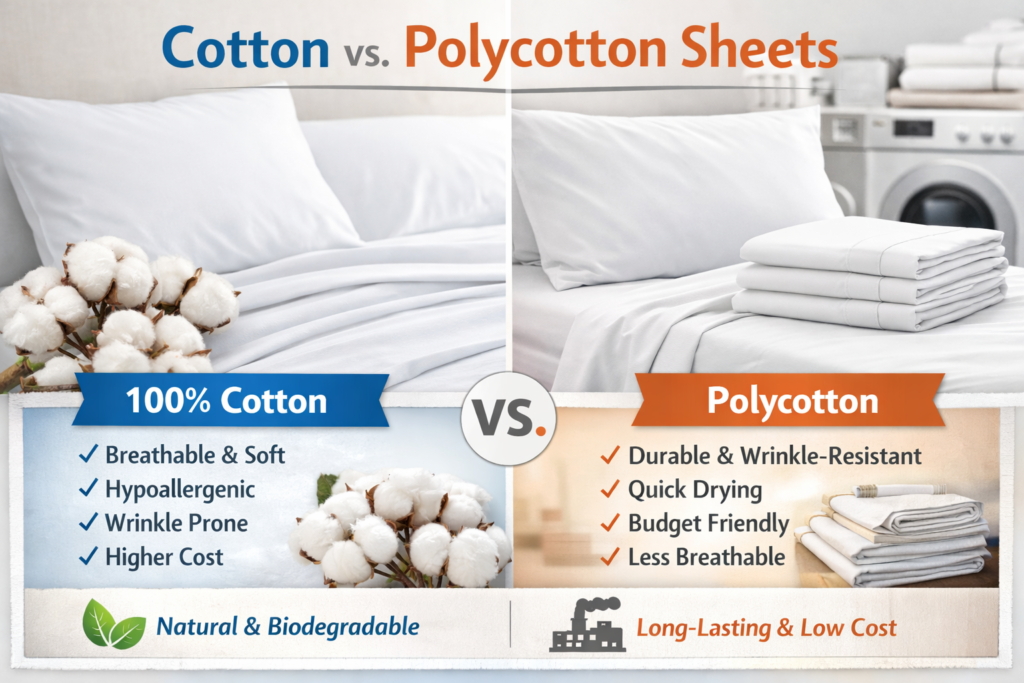
- Superior Breathability: Cotton is naturally porous. This allows air to circulate and moisture to be wicked away from the body, making it ideal for hot sleepers or summer months.
- Hypoallergenic Properties: Since it is a natural fiber, pure cotton is less likely to irritate sensitive skin or cause allergic reactions.
- The Luxury Feel: There is a specific crispness to a high thread count cotton sheet that synthetic blends struggle to replicate.
- Gets Softer Over Time: Unlike many materials that degrade, high quality cotton actually becomes softer and more supple with every wash.
The Drawbacks of Cotton
- Prone to Wrinkling: 100 percent cotton is notorious for wrinkling. If you want a pristine look, these sheets require significant ironing.
- Higher Price Point: As a natural commodity, cotton is more expensive to produce and purchase than synthetic blends.
- Shrinkage Risk: If washed or dried at excessively high temperatures, cotton fibers can contract, leading to ill-fitting sheets.
Understanding Polycotton Sheets
Polycotton is a synthetic blend, typically consisting of 50 percent cotton and 50 percent polyester, though ratios like 65/35 are also common. It was designed to combine the natural feel of cotton with the durability of man-made polyester.
The Benefits of Polycotton
- Exceptional Durability: Polyester is a very strong fiber. When blended with cotton, it creates a fabric that can withstand frequent, heavy duty industrial washing without thinning out.
- Wrinkle Resistance: One of the biggest selling points for polycotton is that it comes out of the dryer almost ready to use. This saves businesses hours of labor in ironing.
- Quick Drying: Polycotton dries much faster than pure cotton. This reduces energy costs and speeds up the turnover of rooms in a hotel or care home setting.
- Affordability: Because polyester is cheaper to manufacture, polycotton sheets are significantly more budget friendly for bulk buyers.
The Drawbacks of Polycotton
- Heat Retention: Because polyester is essentially a form of plastic, it does not breathe as well as cotton. It can feel “sweaty” to some guests in warm environments.
- Pilling: Over time, low quality polycotton can develop small “pills” or bobbles on the surface, which can feel scratchy against the skin.
- Less Absorbent: It is not as effective at moisture wicking as pure cotton.
Head-to-Head Comparison: Which Should You Choose?
To help you decide which material fits your business model, let’s compare them across four key categories.
1. Longevity and Maintenance
In a commercial environment, sheets are washed far more often than in a domestic home. Polycotton is generally the winner for longevity. It holds its shape better and resists the “greyed out” look that can sometimes plague white cotton after 50 plus washes. However, if you have a dedicated professional laundry service that specializes in starching and pressing, the maintenance of cotton becomes less of a burden.
2. Comfort and Guest Experience
If you are running a five star hotel, guests expect the weight and cool touch of 100 percent cotton. It signifies luxury. On the other hand, for student accommodation, budget hostels, or care facilities, polycotton is often preferred because it stays smooth and presentable even with minimal maintenance.
3. Environmental Impact
Cotton is a renewable resource and is biodegradable. However, conventional cotton farming requires significant water. Polyester is derived from petroleum and is not biodegradable. If your brand focuses heavily on sustainability, you may lean toward organic cotton or recycled polyester blends.
4. Cost Efficiency
When looking at the initial investment, polycotton is the clear winner. For startups or businesses looking to scale quickly, the lower price point allows for a larger inventory. When you work with a professional wholesale bed sheet supplier in UK, they can often provide volume discounts that make even high quality cotton more accessible, but polycotton will always be the more economical choice in the long run due to lower drying and ironing costs.
How to Source the Best Quality Bedding
Regardless of the material you choose, the quality of the weave and the reputation of the manufacturer are paramount. You should look for suppliers who offer transparent specifications regarding thread count and “GSM” (grams per square meter).
A reliable wholesale bed sheet supplier in UK will be able to provide you with samples so you can test the fabric under your own laundry conditions. It is important to check the stitching on the corners of fitted sheets, as this is the primary point of failure in commercial linens. High quality wholesale suppliers ensure that the elastication is robust enough to withstand being pulled over mattresses hundreds of times.
Final Verdict: Which Fabric Wins?
There is no single winner; there is only the fabric that is right for your specific use case.
- Choose 100% Cotton if: You operate a luxury establishment, prioritize guest comfort above all else, and have the budget for professional ironing and higher replacement frequencies.
- Choose Polycotton if: You need durable, easy care linens that look great with minimal effort, you are conscious of energy and labor costs, and you need a high return on investment.
Frequently Asked Questions (FAQs)
1. Does polycotton feel scratchy compared to cotton?
Not necessarily. High quality polycotton blends with a higher cotton ratio can feel very soft. However, lower quality blends may develop pilling over time, which can create a scratchy texture. Regular replacement and using quality fabric softeners can prevent this.
2. What is the best thread count for wholesale sheets?
For commercial use, a thread count between 200 and 300 is usually the “sweet spot.” It offers a balance of comfort and durability. Anything much higher can make the fabric too dense for industrial laundry machines to clean effectively.
3. Will 100% cotton sheets shrink after the first wash?
Yes, most pure cotton will shrink by about 3 to 5 percent during the first few washes. Professional suppliers usually size their sheets slightly larger to account for this initial shrinkage.
4. Is polycotton better for the environment because it lasts longer?
This is a complex issue. While polycotton lasts longer and requires less energy to dry, it contains synthetic fibers that do not break down. Cotton is natural and biodegradable but requires more water and energy for maintenance.
5. Can I mix cotton and polycotton in the same facility?
It is generally not recommended to mix them in the same laundry load. Different fabrics require different wash temperatures and drying times. Mixing them can lead to uneven wear and may damage the cotton fibers if dried at the high heat settings used for polycotton.