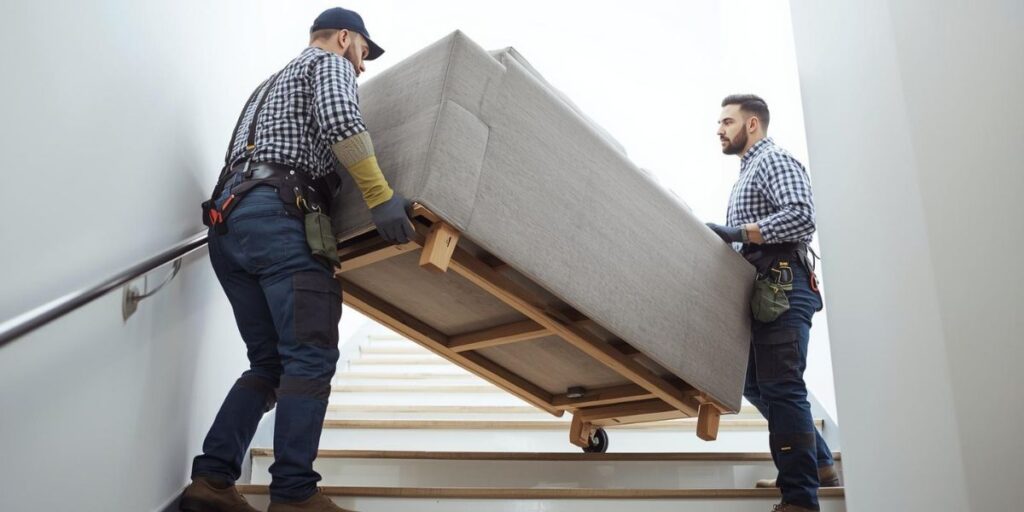
The biggest challenge faced by anyone who moves house is the transportation of bulky furniture. A couch, a mattress base, a piano, a closet, etc., all pose a challenge. It’s a challenge that requires maximum care. Otherwise, the furniture might damage the walls. Most folks don’t realize how much precision big-object transport really takes. That gap? It’s filled by hired hands who know lifting techniques and carry gear for safe hauling.
Hauling big furniture? Renting from U-Haul, Budget, or Penske doesn’t ease the toll on your body. Moving it around corners and up stairs takes skill – raw effort alone won’t cut it. Muscle pulls or worse might follow when moves go unguided. Floors could scuff, walls may dent, and wooden legs can crack under pressure. Experience helps avoid those costly slips.
The Dangers of Lifting Big Furniture Alone
Lifting bulky items by yourself might lead to serious strain. Unsteady teamwork often results in dropped loads. Slip injuries become more likely when people rush without guidance. Poor grip causes sudden shifts during moves. Awkward postures while shifting weight invite back trouble. Miscommunication between movers increases collision risks. Uneven lifting triggers an imbalance on stairs. Overconfidence usually ends in preventable accidents.
- Heavy loads handled incorrectly can hurt your spine plus wreck your knee joints. Wrong moves pile on pressure where it shouldn’t go – the low back bears the brunt, while the legs take silent damage.
- Bang a heavy chair against the wall, and the floor gets marked. Slide a table too fast, and the legs might snap. Knock over a lamp while moving boxes, and the glass cracks underfoot. Hauling cabinets carelessly leaves trails on wood. A shelf dropped sideways and split at the corner. Pushing furniture across tile chips the finish. Bumping a desk into a doorframe loosens its joints.
- Cramped corridors mean furniture often bumps walls. Stairwells with little room lead to scrapes along the edges. Door openings get nicked when pieces shift during moves.
- Hazards like these slip under the radar most of the time, when everything feels hurried on relocation day. Those who move households for a lifetime handle it better – experience guides them, preparation supports them, and proper tools make the difference.
The Role of Furniture Movers
Furniture movers make up labor-only moving crews, folks who know how to manage large pieces safely. These teams deal only with shifting heavy household items – loading them, taking them out, setting them where needed – but bring no vehicle. Typically, their work covers:
- Picking paths ahead of time helps avoid bumps when shifting heavy items through hallways. Moving slowly matters more than speed once corners come into play. Clear doorframes first before lifting anything bulky off the ground. Watch the ceilings, too, if tall pieces tilt during turns. Smooth transitions between rooms depend on steady teamwork, not just muscle.
- Furniture moves more easily when the wheels roll beneath it. Smooth paths come from sliding boards tucked under heavy pieces. Straps wrap around edges so hands stay clear. Blankets go between surfaces to stop scratches. Protection happens quietly, piece by piece.
Furniture movers handle heavy items without a hitch, moving them straight from the vehicle into their spot inside. Their way of working keeps everything steady during shifts across distances.
Techniques Professionals Use
Professional movers employ several key techniques to minimize risk:
- Start low by folding your knees. That way, tension stays off the spine. Keeping things upright helps too – pressure shifts where it should.
- Take pieces apart if you can. Big furniture usually comes apart, so moving it stays under control.
- Furniture rests safely when layered with old quilts or foam sheets. Beneath heavy legs, plastic sheeting slips quietly into place. Cushioned corners guard against bumps along walls. Floor spots stay clear where protective layers lie flat.
- Furniture on wheels glides more easily when handled right. Sliders keep floors safe while shifting bulky items.
- Folks who do this daily barely think about it – yet those trying solo might find everything shifts when they try these moves.
Efficiency Meets Safety
One hour with pro movers feels like magic compared to hauling boxes all day alone. They slide through tight hallways like water, trained hands making tough moves look easy. Time melts away when experts handle lifts instead of you sweating each trip. Less strain, fewer setbacks – just steady progress without the chaos.
Furniture movers usually spot trouble spots early, stopping small issues from growing. Around sharp turns, up narrow stairs, right where it needs to go – they guide pieces without guesswork. Less fumbling means less risk to belongings or walls.
Extra Help for Your Move
Starting with help just for lifting, some crews still bring boxes and wrap things well. Without offering a vehicle, their hands-on support pairs neatly with smart prep work. Picture big lamps, delicate items, or beds getting bundled right – ready to shift fast.
Conclusion
Furniture that weighs a lot can still be moved without risk or weariness. Expert teams bring know-how, tools, and smooth teamwork so bulky pieces don’t stay stuck. In America, some companies offer help just with loading – people drive their own vehicle but skip the strain. Instead of struggling alone, hands-on assistance handles what arms cannot.
Starting with skilled help means less risk for your health, stuff, or home, as experienced movers keep things smooth, quick, and hassle-free.