
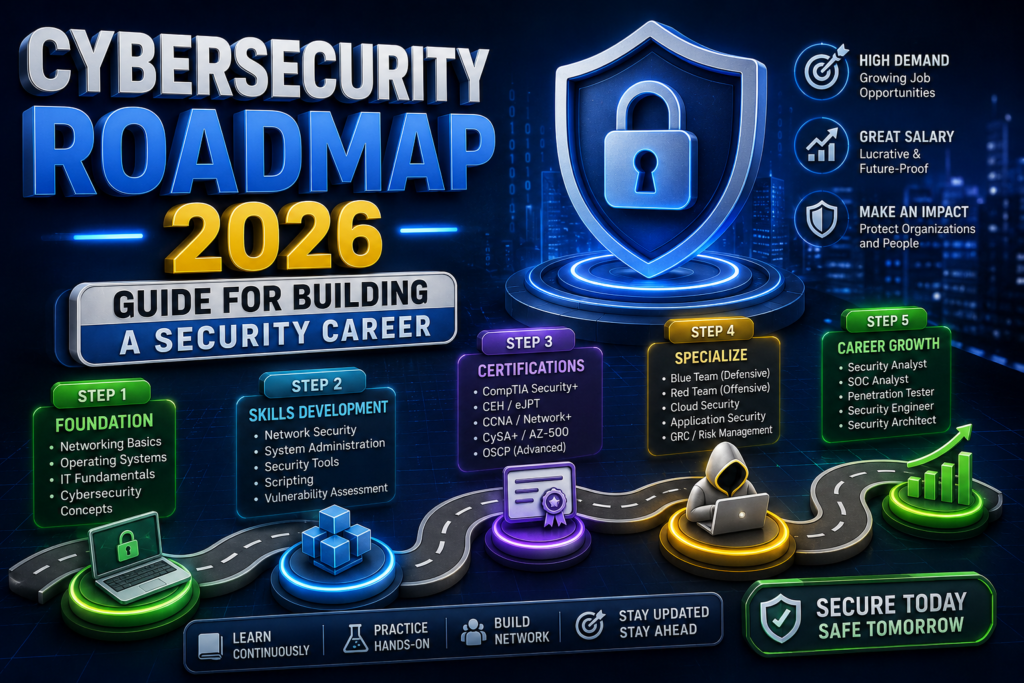
Cybersecurity has evolved from a specialized IT function into one of the most important fields in modern technology. As organizations continue to digitize operations, adopt cloud platforms, and manage increasing amounts of sensitive data, the demand for security professionals continues to grow. For individuals considering a career in cybersecurity, the opportunities are broader than ever. However, many newcomers struggle to understand where to begin, what skills to learn, and which certifications provide the most value. This cybersecurity roadmap for 2026 outlines the key stages of building a successful security career, from foundational knowledge to advanced specialization.
Why Cybersecurity Remains a Strong Career Choice
Cyber threats continue to become more sophisticated, creating ongoing demand for qualified professionals who can protect systems, networks, and data.
Organizations across industries need security experts to:
- Protect digital assets
- Monitor security incidents
- Manage compliance requirements
- Secure cloud environments
- Reduce cyber risks
- Respond to evolving threats
Unlike some technology roles that fluctuate with market trends, cybersecurity remains a long-term necessity for businesses of all sizes.
Step 1: Build Strong IT Fundamentals
Before focusing on cybersecurity tools and techniques, it is important to understand how technology systems work.
A solid foundation should include:
Networking Basics
Understanding networking concepts helps security professionals identify vulnerabilities and protect communication channels.
Important topics include:
- TCP/IP
- DNS
- Routing and switching
- Network protocols
- Firewalls
- VPN technologies
Operating Systems
Security professionals frequently work with both Windows and Linux environments.
Focus on learning:
- System administration basics
- User management
- File permissions
- Process management
- System logs
Cloud Fundamentals
Cloud platforms play a major role in modern security operations. Basic familiarity with cloud services can provide a significant advantage as organizations increasingly migrate workloads to cloud environments.
Step 2: Learn Core Cybersecurity Roadmap Concepts
Once foundational IT knowledge is established, candidates should focus on cybersecurity fundamentals.
Key concepts include:
| Security Domain | What You Learn |
|---|---|
| Risk Management | Identifying and reducing threats |
| Network Security | Protecting network infrastructure |
| Identity Management | User authentication and access control |
| Security Operations | Monitoring and incident response |
| Cryptography | Protecting sensitive information |
| Security Governance | Policies, compliance, and frameworks |
Understanding these areas creates a strong base for future specialization.
Step 3: Develop Practical Skills
Cybersecurity is a hands-on discipline. Employers often value practical experience as much as theoretical knowledge.
Useful activities include:
- Creating home labs
- Practicing with virtual machines
- Learning security tools
- Analyzing logs
- Exploring network monitoring platforms
- Studying attack and defense techniques
Practical experience helps transform concepts into real-world skills. Many professionals use learning platforms, labs, and resources from Cert Mage to supplement their cybersecurity studies and strengthen certification preparation.
Step 4: Earn Relevant Certifications
Certifications can help demonstrate technical knowledge and improve career opportunities.
Entry-Level Certifications
Professionals beginning their cybersecurity journey often consider certifications focused on:
- Security fundamentals
- Networking basics
- Risk management
- Security operations
Intermediate Certifications
As experience grows, candidates can pursue certifications covering:
- Security engineering
- Cloud security
- Ethical hacking
- Incident response
- Security administration
Advanced Certifications
Experienced professionals may eventually pursue certifications related to:
- Security architecture
- Governance and compliance
- Security leadership
- Enterprise cybersecurity strategy
Certifications should support career goals rather than replace practical experience.
Step 5: Choose a Cybersecurity Specialization
Cybersecurity includes numerous career paths. Understanding available specializations can help professionals focus their learning efforts.
Security Operations
Security operations professionals monitor systems, investigate alerts, and respond to security incidents.
Cloud Security
Cloud security specialists focus on securing cloud infrastructure, applications, and data.
Security Engineering
Engineers design and implement security controls that protect organizational environments.
Governance, Risk, and Compliance
These professionals help organizations meet regulatory requirements and manage risk effectively.
Penetration Testing
Penetration testers identify vulnerabilities by simulating real-world attacks against systems and applications. Each specialization requires different technical skills and long-term learning commitments.
Step 6: Build Real-World Experience
Employers often prioritize practical experience when hiring cybersecurity professionals.
Experience can be gained through:
- Entry-level IT positions
- Help desk roles
- Network administration
- Internships
- Volunteer projects
- Security labs
Many successful security professionals begin in general IT positions before transitioning into dedicated cybersecurity roles. This progression helps build the technical understanding necessary for advanced security responsibilities.
Step 7: Stay Current With Industry Changes
Cybersecurity evolves rapidly. New threats, technologies, and defense strategies emerge continuously.
Professionals should regularly:
- Read security news
- Follow industry blogs
- Participate in professional communities
- Attend webinars
- Explore new security technologies
Continuous learning is essential for long-term success. The most effective cybersecurity professionals maintain a mindset of lifelong education.
This concept becomes easier with Cert Mage’s YouTube explanation: 🧿
Skills Employers Value in 2026
Technical skills remain important, but employers also look for broader capabilities.
Highly valued skills include:
- Problem-solving
- Analytical thinking
- Communication
- Documentation
- Incident investigation
- Risk assessment
- Automation knowledge
Professionals who combine technical expertise with strong communication abilities often advance more quickly within organizations.
Common Mistakes New Cybersecurity Roadmap Professionals Make
Many beginners encounter similar challenges when entering the field.
Skipping Fundamentals
Some candidates focus on advanced security topics without first learning networking and operating systems.
Collecting Certifications Without Skills
Certifications are valuable, but practical experience remains essential.
Trying to Learn Everything
Cybersecurity is broad. Focusing on one area at a time often produces better results.
Ignoring Soft Skills
Communication and teamwork are critical in security roles, especially when explaining risks to non-technical stakeholders. Avoiding these mistakes can help accelerate career development.
Looking Ahead to the Future
Cybersecurity careers are expected to remain in demand well beyond 2026. Organizations continue investing heavily in security because the risks associated with cyber threats continue to increase.
Emerging areas expected to influence future opportunities include:
- AI security
- Cloud-native security
- Zero Trust architecture
- Identity security
- Security automation
- Threat intelligence
Professionals who develop strong foundations and adapt to evolving technologies will be well positioned for long-term success.
In Conclusion
Building a cybersecurity career in 2026 requires a combination of technical knowledge, practical experience, certifications, and continuous learning. Starting with IT fundamentals, developing security expertise, and gradually specializing can create a strong foundation for professional growth.
Cybersecurity offers diverse career opportunities, strong demand, and long-term relevance. By following a structured roadmap and focusing on skill development, aspiring professionals can build rewarding careers in one of the technology industry’s most important fields.
For a quick graphical overview, readers may check Cert Mage’s Facebook post.
FAQs
Is cybersecurity a good career choice in 2026?
Yes, cybersecurity remains a strong career choice because organizations continue facing sophisticated cyber threats. Demand for qualified security professionals remains high across industries, creating numerous career opportunities.
Do I need a degree to start a cybersecurity career?
A degree can be helpful, but it is not always required. Many professionals enter cybersecurity through certifications, practical experience, self-study, and entry-level technology positions.
Which cybersecurity certification should beginners pursue first?
Beginners should focus on certifications covering security fundamentals and networking basics. Building foundational knowledge helps prepare candidates for more advanced cybersecurity certifications and professional responsibilities.
How long does it take to become a cybersecurity professional?
The timeline varies depending on experience, learning pace, and career goals. Many individuals develop entry-level cybersecurity skills within several months of focused study and practice.
What cybersecurity specialization has the best future potential?
Cloud security, security engineering, identity management, and AI-related security roles are expected to experience significant growth as organizations continue modernizing their technology environments.
Discover more: Snowflake Certification Guide for Data Cloud Professionals

