Plastic products exposed to sunlight degrade faster than most buyers realise. Colour fades. Surface cracks. Mechanical properties drop. For outdoor applications — from roofing sheets to agricultural films, garden furniture to telecom enclosures—UV stabilisation is not optional. UV Masterbatch is the most efficient and process-friendly way to build this protection into plastic products. And master batch manufacturers in Gujarat have built a strong reputation for supplying high-performance UV solutions to domestic and export markets alike.
What Is UV Masterbatch and How Does It Work?
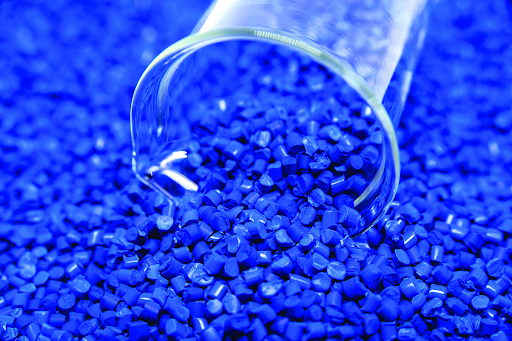
UV Masterbatch is a concentrated formulation of UV stabilisers — typically HALS (Hindered Amine Light Stabilisers) and/or UV absorbers — pre-dispersed in a carrier resin. When let down into a base polymer at 1–5%, the masterbatch distributes these protective agents uniformly throughout the plastic matrix.
The stabilisation mechanism works through two main pathways. UV Absorbers (UVA) — compounds like benzophenones and benzotriazoles — absorb UV radiation and convert it to harmless heat, preventing it from reaching polymer chains. HALS do not absorb UV but instead scavenge the free radicals generated by UV exposure before they can break polymer chains. They are highly efficient and regenerative in function. High-performance UV Masterbatch formulations often combine both mechanisms for synergistic, long-lasting protection.
Why Gujarat Is a Centre of Expertise for UV Masterbatch
Gujarat accounts for a significant portion of India’s plastic processing industry — from flexible packaging to agricultural films, pipes, and automotive components. The state’s industrial base has driven the development of a mature and technically advanced masterbatch sector. Master batch manufacturers in Gujarat have built expertise in UV stabilization specifically because the state’s agricultural sector — a massive consumer of LDPE mulch films, HDPE drip pipes, and PP woven bags — demands high-performance UV protection.
Export relationships with markets in the Middle East, Southeast Asia, and Africa have further pushed Gujarat-based manufacturers to develop UV Masterbatches that meet international standards, including ISO 4892 (accelerated weathering) and ASTM G154/G155 UV exposure protocols.
UV Masterbatch Applications Across Industries
| Industry | Application | Key UV Performance Requirement |
| Agriculture | Greenhouse films, mulch films, drip pipes | 3–5 year outdoor lifespan |
| Construction | Roofing sheets, corrugated panels, water tanks | 10+ years, colour stability |
| Automotive | Exterior trim, bumpers, mirror housings | OEM colour & gloss retention specs |
| Telecom/Infrastructure | Outdoor enclosures, conduits, cable trays | 15+ year UV resistance |
| Packaging | Outdoor storage bags, FIBC / jumbo bags | UV stability during 6–12 months outdoor storage |
| Furniture | Garden chairs, outdoor tables, parasol frames | 5+ years colour and structural stability |
How to Choose UV Masterbatch from Master Batch Manufacturers in Gujarat
Match the UV Package to the Polymer
HALS efficiency varies significantly between polymers. For PP, standard HALS work well. For PVC, UV absorbers take precedence. HDPE and LDPE require HALS packages selected to withstand the specific thermal history of film extrusion. Master batch manufacturers in Gujarat who specialise in UV technology will have polymer-specific formulations — ask directly.
Specify the Required Service Life
A UV Masterbatch for a 12-month agricultural film is formulated differently from one targeting a 10-year roofing sheet. The HALS loading level, molecular weight, and additive combination all change based on the required outdoor service life. Be specific with your supplier.
Check Accelerated Weathering Data
Any credible supplier should be able to provide accelerated weathering data — xenon arc or UV fluorescent lamp test results showing colour retention (Delta E), tensile strength retention, and elongation retention after defined exposure hours. ISO 4892-2 or ASTM G154 data is the standard.
Best Practices for Using UV Masterbatch
- Let-down ratio typically 1–3% for most applications — higher for extreme outdoor exposure requirements
- Ensure the masterbatch is fully incorporated using adequate mixing in the extruder
- Combine with carbon black masterbatch for maximum UV protection in dark-coloured applications — carbon black is the most effective UV absorber at high loadings
- Avoid overheating during processing, which can degrade HALS and reduce their effectiveness
- Store UV Masterbatch away from UV light and heat to preserve additive potency before use
Common Mistakes in UV Masterbatch Selection and Use
- Under-dosing — using less masterbatch than recommended to cut costs, resulting in premature UV failure
- Using a UV Masterbatch formulated for one polymer in a different polymer matrix
- Not specifying the application environment — UV intensity in Gujarat or Rajasthan is very different from Northern Europe
- Trusting supplier claims without asking for accelerated weathering test data
- Ignoring the impact of carbon black in the formulation on other additive interactions
FAQs
Q1. What is the difference between UV absorbers and HALS in UV Masterbatch?
UV absorbers intercept UV radiation and convert it to heat before it reaches polymer chains. HALS scavenge free radicals formed during UV-induced polymer degradation. Both are commonly combined in UV Masterbatch for comprehensive protection.
Q2. Which polymer needs the most UV protection?
Polypropylene (PP) is one of the most UV-sensitive commodity polymers and degrades rapidly without protection. LDPE and HDPE are more resistant but still require UV Masterbatch for extended outdoor use.
Q3. How do I test whether a UV Masterbatch is performing correctly?
Request accelerated weathering test data from the supplier. For in-house validation, use a xenon weatherometer or QUV tester and measure colour (Delta E) and mechanical properties against an unprotected control.
Q4. Can master batch manufacturers in Gujarat supply food-contact safe UV Masterbatch?
Yes. HALS additives approved for food-contact applications per EU Regulation 10/2011 or FDA 21 CFR are available. Request compliance documentation for food-adjacent applications.
Q5. What let-down ratio is recommended for agricultural greenhouse films?
Typically 1.5–3% depending on the required service life. For 5-year films in high-UV environments, higher loading levels and specific high-molecular-weight HALS packages are recommended.
Q6. Is UV Masterbatch compatible with flame-retardant additives?
It depends on the specific chemistry. Some FR additives can interact with HALS. Always consult your masterbatch supplier when combining UV protection with flame retardancy in the same compound.
Conclusion
UV Masterbatch is one of those additives where getting it right has a direct and measurable impact on your product’s performance in the field. Under-stabilised products fail early, generate warranty claims, and damage customer trust. Master batch manufacturers in Gujarat have invested in the technical knowledge and testing infrastructure to help you get it right — whether your application is a one-year agricultural film or a twenty-year infrastructure component.
Get the UV protection your products deserve. Contact master batch manufacturers in Gujarat for UV Masterbatch technical consultations, polymer-specific formulations, and accelerated weathering data.