
There is a particular kind of regret that commercial property professionals know well. It is not the regret of spending too much. It is the regret of spending in the wrong order.
A refurbishment budget gets allocated, and the work begins. Somewhere around the middle of the project, something becomes visible that should have been identified at the assessment stage. Maybe there is a curtain wall seal that has been failing silently for two years, a section of anodised aluminium that looks intact from a distance but is delaminating behind the surface, or a glass panel with scratch damage that was going to be retained but now clearly needs addressing before the new coating goes on around it.
At that point, the available options are not ideal. Stop and address it properly, which costs time and money that wasn’t budgeted, or maybe proceed and work around it, which produces a result that everyone involved knows is not quite right. Or defer it, which means the refurbishment you just paid for has a known problem built into it from day one.
All three outcomes share the same root cause. The assessment wasn’t thorough enough before the spending began.
Therefore, if you, too, are planning the renovation of your unit, this is the checklist that should happen before any commercial facade refurbishment project moves from planning to procurement.
Start With the Curtain Wall
Why the Curtain Wall Is Always the First Assessment Priority
The curtain wall is the system that keeps weather out, thermal performance in, and the structural integrity of the facade intact. The condition of the curtain wall glazing on any commercial building determines what every other refurbishment decision can and cannot achieve.
In a building that receives cosmetic refurbishment work while its curtain wall system has underlying seal failures, gasket degradation, or drainage blockages, the refurbishment looks satisfactory only for a season. When the curtain wall fails to prevent water ingress, it begins to affect the new finishes, and the cost of addressing this issue at that stage is significantly higher than if it had been resolved before the refurbishment started.
What a Proper Curtain Wall Assessment Actually Involves
A proper assessment of curtain wall refurbishment is not a visual inspection from ground level. It involves getting close to the system using access equipment or internal inspection points and looking at the things that matter rather than the things that are simply visible.
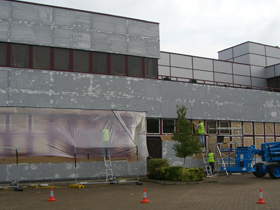
Sealant condition is the first priority. Look for hardening, cracking, adhesion loss at the edges, and areas where the sealant has pulled away from the frame or the glass edge. Any of these conditions means water is finding or will find a way through.
Gasket condition is the second. The rubber gaskets that form the primary seal between glass units and aluminium framing in curtain wall systems compress and harden over time. Hardened gaskets no longer form an effective seal. They need replacement before any other refurbishment work is carried out, because replacing them after the surrounding surfaces have been refinished means damaging work that has already been paid for.
Anodised Surfaces
What Anodised Coating Failure Actually Looks Like
Anodised aluminium is on most commercial buildings built or refurbished from the 1970s onwards. Window frames, curtain wall framing, cladding panels, entrance canopies, and facade trim; in all these cases, anodising is the specified finish for aluminium architectural elements across decades of commercial construction, and it ages in ways that are not always well understood by the people responsible for maintaining the buildings that have it.
Healthy anodised repairs have a consistent, slightly lustrous appearance. The colour, whether it is natural silver, bronze, gold, or a darker architectural finish, is even across the surface and holds up well to a close inspection. When anodising begins to fail, the signs are specific and recognisable once you know what to look for.
Chalking is the most common presentation. The surface develops a dull, powdery appearance that doesn’t respond to cleaning. This is the anodic layer breaking down at the surface, and it typically indicates UV degradation over years of exposure.
The Assessment Questions That Matter for Anodised Surfaces
How extensive is the failure? Localised chalking, or pitting, in isolated areas is almost always repaired. Widespread failure across large surface areas requires a different calculation. How deep has any corrosion penetrated? Surface oxidation is manageable. Pitting that has gone deep into the aluminium section changes the structural calculation. Is the failure consistent with UV degradation, which is a surface phenomenon, or does it suggest moisture ingress behind the anodic layer, which implies a more complex remediation?
These are the questions a specialist assessing anodised repairs should be able to answer clearly. If they cannot, they should refrain from making the determination.
Glass: What to Look for Before You Decide What to Do About It
The Range of Glass Damage That Can Be Addressed Without Replacement
Glass assessment in a commercial facade refurbishment context requires looking at each unit with a specific question in mind. Is the damage in this glass unit something that can be resolved on site, or does it genuinely require unit replacement?
The answer matters enormously because the cost difference is significant. A glass unit replacement in a curtain wall system involves procurement lead time, the installation program, temporary weatherproofing during the replacement, and disposal of the old unit. A specialist system for removing glass scratches, applied on site by experienced operatives, resolves scratch damage, surface contamination, and certain types of coating damage at a fraction of that cost and with none of that disruption.
Glass Spraying: When It’s the Right Solution and When It Isn’t
Glass spraying is the application of specialist coatings to glass surfaces on site, which addresses a specific category of situation that neither scratch removal nor unit replacement resolves. Where glass has suffered widespread surface degradation, where a change of appearance is specified as part of the refurbishment, or where privacy, solar control, or decorative film application is required, glass spraying achieves outcomes that are otherwise only available through full unit replacement at considerably greater cost.
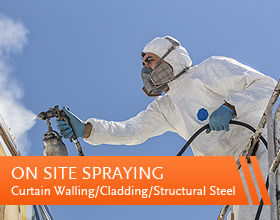
The assessment should identify units where glass spraying is the appropriate intervention and confirm that their surface condition is suitable for coating adhesion. A specialist glass spray painting contractor should be able to advise on surface preparation requirements at the assessment stage, because applying any coating to inadequately prepared glass is one of the most reliable ways to produce a result that fails prematurely and looks worse than the original problem.
Summing Up
To sum up, prior to investing in commercial refurbishment, it is crucial to conduct a thorough analysis of all types of damages before commencing the renovation work. This analysis will help you in gaining more clarity.