
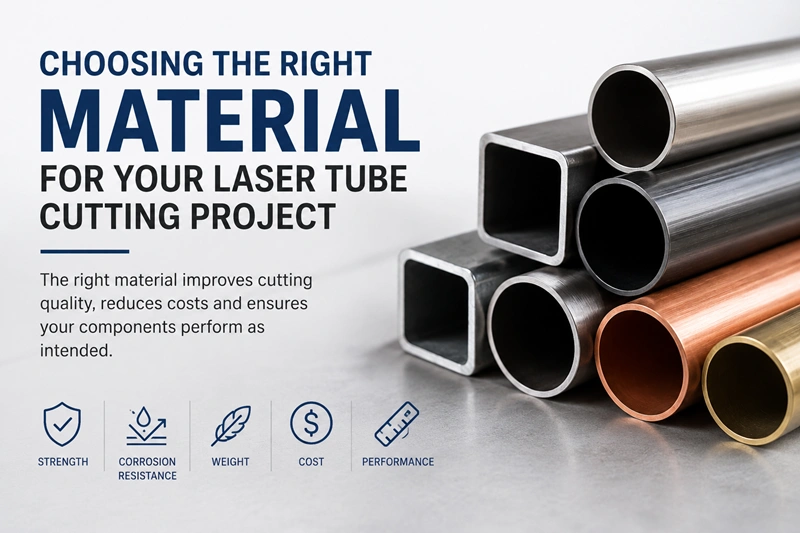
Material selection is one of the first decisions made in a fabrication project, and it often has a bigger impact than people expect. While modern technology can produce accurate, repeatable results across a wide range of metals, not every material performs the same way. A tube that works well for an indoor handrail, for example, may not be suitable for equipment exposed to harsh weather or corrosive environments.
The right material improves manufacturing efficiency, reduces unnecessary processing, and helps the finished product perform as intended for years to come. The wrong choice often leads to higher production costs, additional finishing work, or premature wear once the component is in service.
Whether you are designing a structural frame, manufacturing machine parts, or sourcing components from a professional laser tube cutting provider, understanding the strengths and limitations of common tube materials helps you make informed decisions. This guide explains the key factors to consider before selecting a material and where each option is best suited.
Why Material Selection Matters in Manufacturing
Precision cutting depends on more than the equipment alone. Every material reacts differently to heat, and those differences influence cutting speed, edge quality, weldability, and the amount of finishing required after production.
The material must also match the conditions in which the finished product operates. A lightweight aluminium tube is often the right choice for transport equipment, while stainless steel is a better fit for environments where corrosion resistance is essential. Mild steel remains a practical option for many structural applications because it offers an excellent balance of strength, availability, and cost.
It is equally important to think beyond the cutting stage. Many tube components are welded, bent, powder-coated, or assembled into larger structures. Choosing a material that performs well throughout the entire fabrication process reduces production delays and improves the overall quality of the finished product.
Furthermore, modern operations increasingly focus on green procurement. Selecting highly recyclable metals and optimizing material nesting during production are foundational elements of eco-friendly manufacturing practices that reduce industrial carbon footprints.
Understanding Common Tube Materials
Mild Steel
Mild steel is one of the most widely used materials because it combines strength, affordability, and excellent workability. It cuts cleanly, is easy to weld, and suits a broad range of fabrication projects, from structural frames to agricultural equipment and general manufacturing.
Where corrosion is not a major concern, mild steel is the most economical option. It also accepts protective finishes such as paint, powder coating, and galvanising, making it suitable for both indoor and outdoor applications when properly treated.
Stainless Steel
When corrosion resistance is a priority, stainless steel is the preferred choice. Its chromium-rich surface forms a natural protective layer that resists rust, making it well-suited to environments exposed to moisture, chemicals, or frequent cleaning. This is why it is commonly used in food processing facilities, commercial kitchens, medical equipment, marine applications, and architectural projects.
Stainless steel also delivers a clean, professional finish, making it popular where appearance matters as much as performance. Although it costs more than mild steel, its durability and low maintenance requirements make it a worthwhile investment for long-term applications.
Aluminium
Aluminium is valued for its high strength-to-weight ratio. It is significantly lighter than steel, making it an excellent choice for industries where reducing weight improves performance or fuel efficiency. Transport equipment, automotive components, aerospace applications, and recreational products are common examples where aluminium tube is widely used.
While aluminium is naturally resistant to corrosion, it is softer than many steel grades. This means material thickness and structural requirements must be carefully considered during the design stage. Additionally, aluminium is highly recyclable, requiring a fraction of the energy to reprocess compared to primary production, making it a key asset in sustainable laser cutting initiatives.
Galvanised Steel
Galvanised steel combines the strength of mild steel with a protective zinc coating that reduces corrosion. It is commonly selected for outdoor structures, fencing, agricultural equipment, and other applications where exposure to the elements is expected.
One important consideration is that any cut edges may require additional zinc-rich protection after fabrication, depending on the application and operating environment. Planning for this during the manufacturing process helps maintain the material’s long-term corrosion resistance and overall service life.
Copper and Brass
Although less common than steel or aluminium, copper and brass tubes are used in specialised applications where electrical conductivity, thermal performance, or appearance is important. Copper is widely used in electrical and cooling systems, while brass is chosen for decorative features, architectural components, and precision engineering.
These materials have highly reflective properties and different cutting characteristics compared to steel, so selecting suitable laser parameters is essential to achieve clean, accurate results without damaging the machinery.
Factors to Consider Before Choosing a Material
Choosing a material should always start with the intended application rather than the price tag. A lower-cost material may appear attractive initially, but if it requires frequent maintenance or fails prematurely, it becomes the more expensive option over time.
Begin by considering where the finished product will be used. Components exposed to coastal conditions, moisture, or chemicals require greater corrosion resistance than those installed indoors. In these environments, stainless steel or aluminium offers better long-term performance than untreated mild steel.
Next, think about the structural demands of the project. Will the tube support heavy loads, withstand repeated impacts, or simply provide a lightweight framework? Matching the mechanical properties of the metal to the job ensures both safety and durability.
It is also worth considering what happens after cutting. If the tube will be welded, bent, or powder-coated, the selected material must perform well throughout each stage of fabrication. Looking at the entire manufacturing process, rather than the cutting operation alone, leads to better decisions and more consistent production outcomes.
How Material Choice Affects Cutting Quality
The quality of a finished tube depends heavily on the material properties. These traits determine how cleanly a tube cuts, how much finishing is required, and how efficiently production moves from one stage to the next.
For example, mild steel typically produces clean, consistent cuts and is well-suited to high-volume fabrication. Stainless steel also achieves an excellent finish when processed correctly with nitrogen assistance to prevent oxidation. Aluminium, while versatile, requires carefully controlled cutting parameters because it conducts heat much faster than steel.
Material thickness also influences the cutting process. Thicker sections require different machine settings and assist gases than thinner tubes to maintain edge quality and dimensional accuracy. Selecting a material that suits both the design and the manufacturing process reduces scrap metal waste, minimises secondary operations, and improves overall production efficiency.
Common Material Selection Mistakes
Many material selection issues can be avoided by considering the entire lifecycle of the finished component rather than focusing only on the purchase price.
One common mistake is choosing a material based solely on the lowest initial cost. While mild steel is often the most economical option, it does not provide the corrosion resistance needed for outdoor or coastal environments without expensive secondary treatments. In these situations, investing in a suitable material upfront reduces maintenance and replacement costs over time.
Another oversight is selecting a material without considering how it will be fabricated after cutting. Welding, bending, machining, and surface finishing all influence the final outcome, so the material must be compatible with every stage of production.
Taking these environmental and structural factors into account during the design stage helps avoid costly modifications once manufacturing is underway.
Summary of Best Practices
Choosing the right material is just as important as selecting the right cutting process. Every metal offers a specific combination of strength, weight, corrosion resistance, and fabrication characteristics, meaning the best choice depends entirely on the demands of the finished application.
By evaluating the operating environment, structural requirements, and manufacturing process from the outset, designers and manufacturers improve production efficiency while reducing the risk of unnecessary costs or rework. A well-informed material choice supports better production results and contributes to a more reliable, longer-lasting, and sustainable finished product.
Frequently Asked Questions
What is the best material for laser tube cutting?
There is not a single material that suits every project. Mild steel is often chosen for its affordability and versatility, while stainless steel offers excellent corrosion resistance and aluminium is ideal when reducing weight is a priority.
Can aluminium be used for laser tube cutting?
Yes. Aluminium is commonly used in laser tube cutting for industries such as transport, automotive, and aerospace. It provides a strong strength-to-weight ratio but requires appropriate machine settings to achieve clean, accurate cuts.
Is stainless steel better than mild steel?
It depends on the application. Stainless steel is better suited to environments where corrosion resistance and appearance are important. Mild steel is generally more economical and works well for many structural and general fabrication projects.
Does material thickness affect laser cutting quality?
Yes. Material thickness influences cutting speed, edge quality, and machine settings. Matching the cutting parameters to the material thickness helps maintain accuracy and reduces the need for additional finishing.
Why should material selection be considered before production begins?
Selecting the right material early ensures the component performs as intended while reducing manufacturing challenges, material waste, and unnecessary production costs. It also improves compatibility with processes such as welding, bending, and finishing.