Hajj and Umrah are among the greatest acts of worship in Islam, yet many first-time pilgrims feel nervous because they are not fully familiar with the rituals. When you understand each step clearly before you travel, your heart feels more relaxed and you can focus on sincerity instead of confusion. This guide will walk you through Hajj and Umrah step-by-step so that every ritual feels meaningful, not just mechanical.
Understanding the Difference Between Hajj and Umrah
Before learning the steps, it is important to know the basic difference between Hajj and Umrah. Hajj is a once-in-a-lifetime obligation for those who are physically and financially able, and it is performed only during specific days in Dhul Hijjah. Umrah, on the other hand, can be performed at any time of the year and has fewer steps than Hajj. Both are great acts of worship that bring immense reward, but Hajj includes additional pillars and days such as Arafah, Muzdalifah, and Mina that Umrah does not. Knowing this difference helps you prepare your mind for the level of commitment each journey requires.
Preparing Your Intention and Heart
Every journey of Hajj and Umrah begins with a sincere intention. Before you leave your home, renew your niyyah that you are going only for the sake of Allah, not for status, business, or photos. Spend time in dua, asking Allah to accept your Hajj and Umrah, to make it easy, and to forgive your past sins. It is also wise to seek forgiveness from family and friends, return trusts, and clear any disputes as much as possible. When your heart is clean and your intention is pure, every step in this journey becomes a source of reward.
Entering the State of Ihram
The first practical step in Hajj and Umrah is entering the state of ihram. Ihram is not just clothing; it is a sacred state in which certain actions become restricted. Men wear two plain white cloths, one wrapped around the waist and the other over the shoulders, while women wear modest, non-showy clothing that covers the body without needing a specific color. Before entering ihram at the miqat (the designated boundary), you should bathe or perform wudu, trim your nails, and remove unwanted hair. Then you make your intention for Hajj or Umrah and begin reciting the talbiyah: “Labbayka Allahumma labbayk.” From that moment, you are in ihram and must avoid forbidden actions such as cutting hair, applying perfume, and engaging in arguments.
Arriving in Makkah and Beginning Tawaf
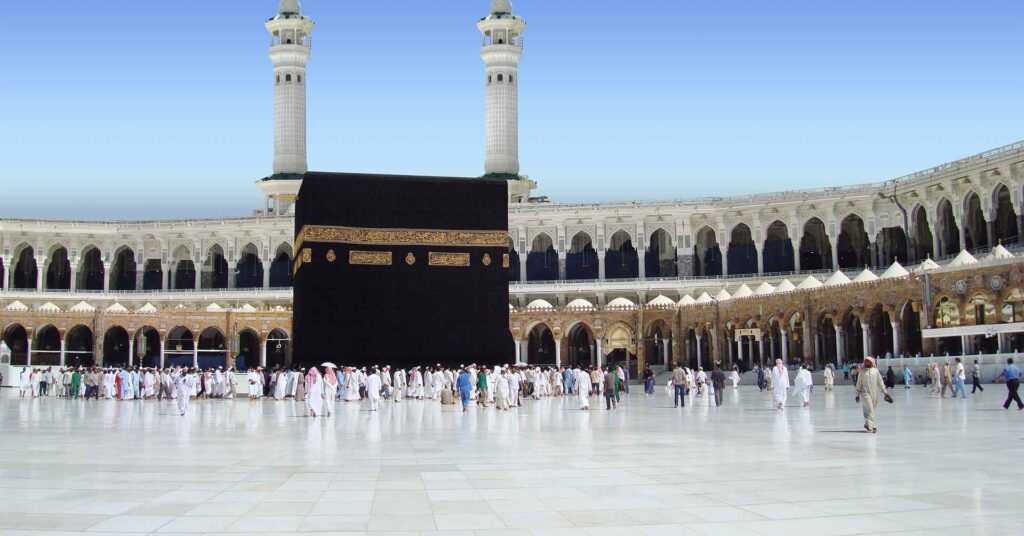
After reaching Makkah, one of the first major rituals of Hajj and Umrah is tawaf, the circling of the Ka’bah. You enter Masjid al-Haram with humility and dua, ideally through the proper gates, and when you first see the Ka’bah, you pause to make heartfelt supplications. Tawaf consists of walking seven times around the Ka’bah in an anti-clockwise direction, starting from the Black Stone. Each round is a chance to pour out your heart to Allah, asking for forgiveness, guidance, and mercy. You may recite Qur’an, duas, and dhikr, remembering that this is one of the most honored places on earth where prayers are accepted.
Performing Sa’i Between Safa and Marwah
After completing tawaf, the next major step in Umrah and in certain stages of Hajj is sa’i between Safa and Marwah. Sa’i is walking back and forth seven times between the two hills, following the example of Hajar who searched for water for her son Ismail. You start at Safa with dua and praise of Allah, then walk toward Marwah, remembering how Allah rewarded her trust with the miracle of Zamzam. The walk includes a section where men may walk briskly between the green markers. Each step in sa’i is a reminder that effort and reliance on Allah go hand in hand.
Shaving or Trimming the Hair
Once sa’i is completed in Umrah, the next step is shaving or trimming the hair, which marks the end of your ihram. Men are encouraged to shave their heads completely if possible, as this carries greater reward, but they may also trim their hair evenly. Women trim a small portion of their hair, usually from the end of a braid or ponytail. This act symbolizes humility and renewal, as if you are leaving behind sin and starting fresh. After this step in Umrah, you leave the state of ihram and the restrictions are lifted.
Key Steps of Hajj: Mina, Arafah, and Muzdalifah
For Hajj, there are additional days and rituals that go beyond the steps of Umrah. On the 8th of Dhul Hijjah, pilgrims travel to Mina, where they spend the day and night in worship and preparation. The next day, they move to the plain of Arafah, the most important day of Hajj. Standing in Arafah, making dua and seeking forgiveness, is the heart of Hajj and a powerful opportunity for renewal. After sunset, pilgrims go to Muzdalifah, where they spend the night under the open sky and collect pebbles for the stoning of the Jamarat. Each of these locations represents submission, patience, and closeness to Allah.
Stoning the Jamarat and Sacrifice
One of the key rituals in Hajj is the stoning of the Jamarat in Mina, which symbolizes rejecting Satan and sin. Using the pebbles collected in Muzdalifah, pilgrims throw them at the pillars representing the places where Shaytan tried to mislead Prophet Ibrahim. This act reminds you to fight your own temptations and stay firm on the path of obedience. Along with this, many pilgrims also perform the sacrifice (qurbani), following the example of Ibrahim’s willingness to sacrifice for Allah. The meat is distributed, and this act reflects obedience, gratitude, and care for others.
Final Tawaf (Tawaf al-Wada) Before Leaving
Before leaving Makkah at the end of Hajj, pilgrims perform a farewell tawaf known as Tawaf al-Wada. This final circling of the Ka’bah is a way to say goodbye with tears, gratitude, and hope that Allah will accept your Hajj and Umrah. You may feel emotional during this ritual, knowing that you are leaving a place that has touched your heart deeply. Many people use this moment to make special duas for their future, their families, and the ummah, asking Allah to invite them again. This farewell tawaf seals the journey and leaves you with memories that stay for a lifetime.
Living the Lessons of Hajj and Umrah After Returning
The real success of Hajj and Umrah is seen not only during the days in Makkah and Madinah, but in how you live after you return home. Understanding each step before you travel helps you appreciate its spiritual meaning, and that understanding continues to guide you in your daily life. You may become more careful with salah, kinder to people, more patient in trials, and more conscious of your words and actions. In this way, Hajj and Umrah are not just trips, but turning points that reshape your character and priorities.
Why Qibla Travels Is the Right Guide for Your Hajj and Umrah
To perform all these steps with confidence and peace of mind, you need a travel partner that understands both the rituals and the practical needs of pilgrims. Qibla Travels provides well-planned Hajj and Umrah packages that guide you through every stage, from entering ihram and performing tawaf to completing sa’i and managing the days of Mina, Arafah, and Muzdalifah. Their experienced team explains the schedule and rituals clearly before you travel and offers on-ground support so you never feel lost or confused. With reliable arrangements for flights, visas, hotels, and transport, Qibla Travels allows you to focus your heart on worship while they handle the logistics. When you choose Qibla Travels for your Hajj and Umrah journey, you gain not just a travel agency, but a trusted companion on one of the most important steps of your spiritual life.