
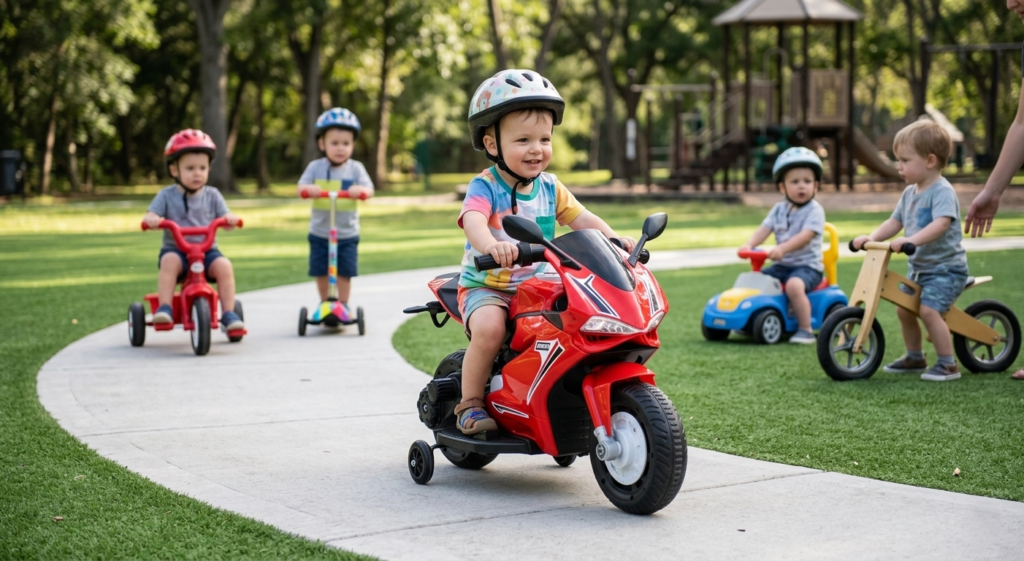
When parents begin searching for the first riding option for their toddler, one common choice they come across is kids bikes with training wheels. These bikes are widely available and often seen as a beginner-friendly option. However, when it comes to two year old children, the decision is not as simple as it seems.
At this early stage, children are still developing balance, coordination, and basic motor skills. Choosing the right type of ride-on is not just about convenience but about supporting natural growth in a safe and comfortable way.
Understanding the Development Stage of a Two year old
At the age of two, children are still learning how to walk steadily, turn, and stop without falling. Their muscles are developing, and their sense of balance is not yet fully formed.
This means that any riding option should match their physical abilities rather than challenge them too much. When a bike is too advanced for their stage, it can lead to frustration or even fear.
For this reason, not all kids’ bikes are suitable for toddlers, especially those designed for slightly older children.
How Training Wheels Actually Work
Training wheels are designed to prevent a bike from tipping sideways. They provide extra support so the child can sit and pedal without worrying about falling.
While this sounds helpful, the way training wheels function can sometimes limit natural balance development. The bike remains upright even if the child does not actively balance themselves.
This creates a situation where children rely on the wheels instead of learning how to control their body movement.
Challenges for Two year olds Using Training Wheels
Although training wheels are meant to make riding easier, they may not be ideal for very young children.
One of the main challenges is coordination. A two year old may find it difficult to pedal while steering at the same time. This combination requires more physical control than most toddlers have at this age.
Another issue is posture. Many training wheel bikes are slightly taller and heavier, making it hard for toddlers to sit comfortably or reach the pedals properly.
Because of this, children may struggle to enjoy the experience and may lose interest quickly.
Balance Development and Its Importance
Balance is one of the most important skills children need to learn before riding a bike.
When using training wheels, the bike stays stable even if the child leans incorrectly. This means the child is not actively practicing balance.
At the age of two, it is more beneficial for children to develop balance naturally through simpler riding options. This helps them build confidence and prepares them for future cycling.
Better Alternatives for Two year old Children
Instead of training wheel bikes, many parents now prefer simpler and more suitable options for toddlers.
Balance bikes, for example, allow children to push themselves forward using their feet while focusing entirely on balance. This matches their natural development stage.
Similarly, push cars or ride-on toys provide movement without requiring pedaling. These options help children understand direction and control in a safe way.
Compared to a Motorcycle for kids or even some Kids electric bikes, these alternatives are more appropriate for early learning because they are simpler and easier to manage.
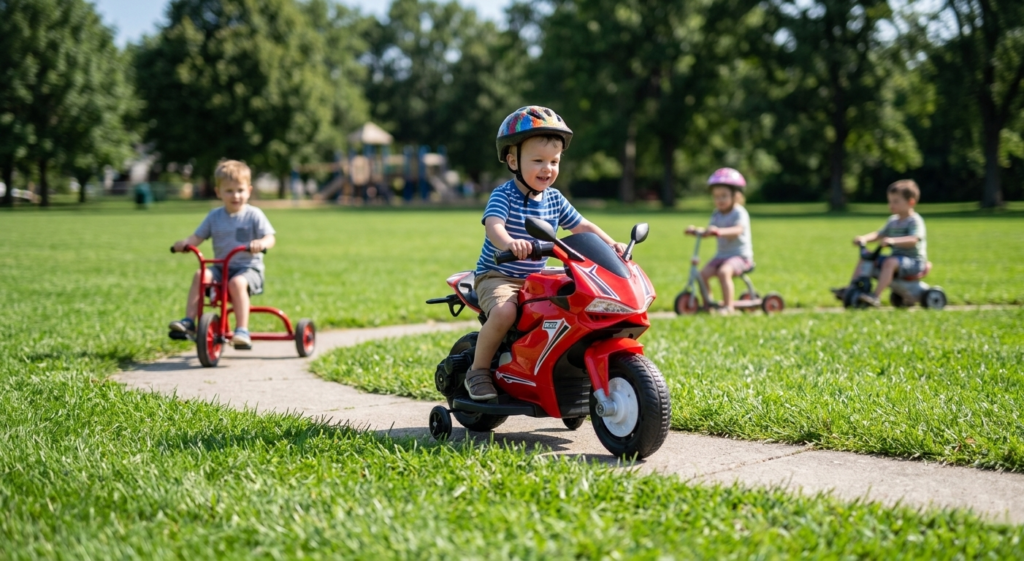
Safety Considerations for Toddlers
Safety should always come first when choosing any ride-on toy.
For two year olds, stability, low height, and lightweight design are key factors. A bike that is too heavy or too tall increases the risk of falling.
Training wheel bikes can sometimes give a false sense of safety. While they prevent tipping, they do not teach children how to react when balance shifts.
Supervision is also essential. Even in a safe environment, toddlers need guidance to understand how to move and stop properly.
Comfort and Ease of Use
Comfort plays a major role in whether a child enjoys riding.
A two year old needs a bike or toy that allows them to sit naturally, place their feet on the ground, and move without effort.
Training wheel bikes often require pedaling, which can feel difficult and tiring for toddlers. This can reduce their interest in riding.
Simpler options, on the other hand, allow children to move freely and enjoy the experience without pressure.
Emotional Experience of First Rides
The first riding experience shapes how children feel about bikes in the future.
If the experience is too difficult, children may become hesitant or lose confidence. If it is smooth and enjoyable, they are more likely to stay interested and keep learning.
Using the right type of ride-on at the right age helps build positive memories and encourages future growth.
Parents who choose age-appropriate options from trusted Toys for Kids collections often notice that their children learn faster and feel more confident.
When Training Wheel Bikes Become Suitable
Training wheel bikes are not completely unsuitable. They are simply better suited for slightly older children.
Around the age of three to four, children develop better coordination and strength. At this stage, they can handle pedaling and steering more effectively.
Introducing training wheels at the right time can help children transition from balance-based toys to traditional bikes.
Long-Term Learning Impact
Starting with the right riding method has long-term benefits.
Children who first learn balance tend to transition to regular bikes more easily. They already understand how to control their body and maintain stability.
On the other hand, children who rely heavily on training wheels may take longer to adjust when those wheels are removed.
This is why many experts recommend focusing on balance first before introducing pedals.
Real-Life Scenario
Imagine a two year old trying to ride a training wheel bike. They may struggle to pedal, feel uncomfortable sitting, and depend entirely on the extra wheels. The experience becomes more about effort than enjoyment.
Now imagine the same child using a balance bike. They push with their feet, move at their own pace, and gradually learn how to stay balanced. The experience feels natural and fun.
This difference highlights why the right choice matters at an early stage.
Conclusion
Kids bikes with training wheels are not the best option for most two year old children. While they provide stability, they do not support natural balance development and can be difficult for toddlers to use.
At this age, simpler options like balance bikes or ride-on toys are more suitable. They match a child’s physical abilities and make learning easier and more enjoyable.
As children grow and develop better coordination, training wheel bikes, Kids electric bikes, or even a Motorcycle for kids can become more appropriate.
Choosing the right option at the right time helps children build confidence, learn naturally, and enjoy their first riding experiences safely.