
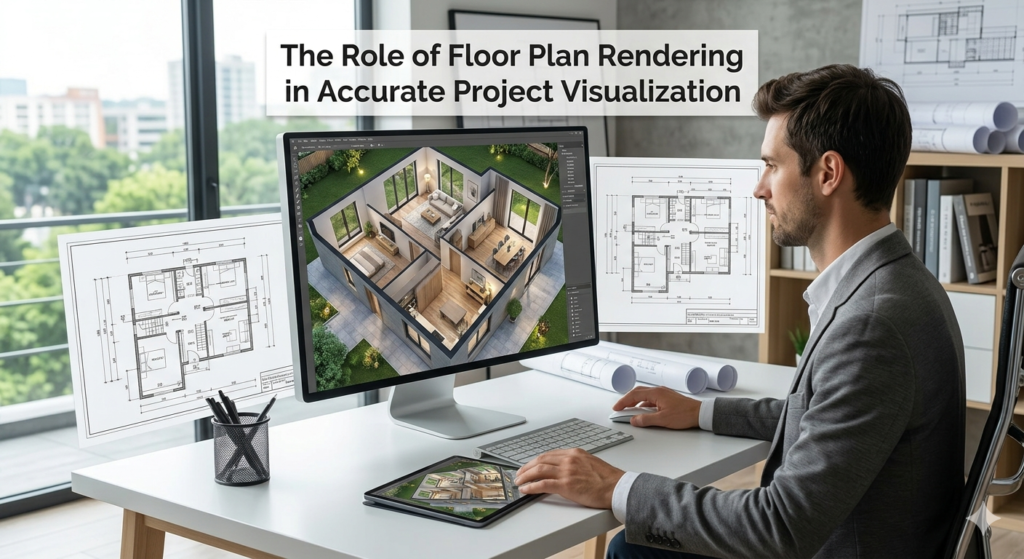
In today’s competitive architecture, construction, and real estate industries, clear project visualization plays a crucial role in successful planning and execution.Traditional blueprints and technical drawings often fail to communicate the complete vision of a project to clients, investors, and stakeholders who may not be familiar with architectural symbols.This is where floor plan rendering becomes essential.Floor plan rendering transforms technical drawings into visually engaging and easy-to-understand representations of interior spaces.
It helps architects, designers, builders, and property developers present their ideas more effectively.By turning flat drawings into realistic visuals, floor plan rendering improves communication, minimizes errors, and ensures that everyone involved in the project understands the design clearly.This article explores the importance of floor plan rendering and how it contributes to accurate project visualization in modern construction and design projects.
Understanding Floor Plan Rendering
Floor plan rendering is the process of converting architectural floor plans into visually detailed images that represent how a space will look once it is built or renovated.Unlike traditional floor plans that consist of lines and symbols, rendered floor plans include colors, textures, furniture layouts, lighting effects, and spatial depth.These visualizations provide a realistic perspective of the interior environment, allowing viewers to understand the design, layout, and functionality of a space. Floor plan rendering is commonly used in.
- Residential architecture project
- Commercial property development
- Interior design presentations
- Real estate marketing
- Renovation and remodeling planning
By offering a clear visual representation of the project, rendering helps bridge the gap between technical drawings and real-world spaces.
Enhancing Client Understanding
One of the biggest challenges in architectural projects is helping clients understand complex construction drawings. Many clients struggle to interpret traditional floor plans because they lack technical knowledge.Rendered floor plans solve this problem by presenting designs in a visually intuitive way.Clients can easily see room layouts, furniture placements, and overall space flow.Instead of imagining how a room might look, they can see a realistic preview of the final result.This improved understanding helps clients feel more confident in their decisions and allows them to provide valuable feedback early in the design process.
Improving Design Communication
Effective communication is essential for the success of any construction or design project. Architects, designers, engineers, contractors, and clients must all share a clear understanding of the project goals.Floor plan rendering improves communication by creating a visual reference that everyone can understand.It ensures that all stakeholders are aligned with the project vision and reduces the risk of misunderstandings.When the entire team can visualize the same design concept, collaboration becomes easier and more productive.
Supporting Better Design Decisions
Another major advantage of floor plan rendering is its ability to support better design decision-making. When designers can see a realistic representation of their ideas, they can evaluate layout efficiency, spatial balance, and aesthetic harmony more effectively.Rendered floor plans allow designers to experiment with different furniture arrangements, materials, and interior styles before construction begins.This flexibility makes it easier to refine the design and achieve the best possible outcome.By identifying potential design flaws early, teams can avoid costly revisions during construction.
Enhancing Real Estate Marketing
In the real estate industry, visual presentation plays a major role in attracting potential buyers or tenants. Floor plan rendering provides developers and real estate agents with powerful marketing tools.High-quality rendered floor plans help potential buyers understand property layouts without physically visiting the site. This is especially useful for pre-construction marketing campaigns where the property has not yet been built.
Realistic floor plan visuals can be used in.
- Property listing
- Real estate brochures
- Online advertisements
- Developer presentations
- Property websites
These visual assets make properties more appealing and increase the chances of generating buyer interest.
Reducing Construction Errors
Miscommunication during the planning phase can lead to costly construction errors. When contractors or builders misunderstand design details, it may result in incorrect measurements, improper layouts, or structural adjustments.Floor plan rendering helps minimize these risks by providing a clear visual guide for construction teams.When builders can see how the space should look, they can better understand the architect’s intent and follow the design accurately.This clarity improves project coordination and reduces the likelihood of mistakes during construction.
Saving Time and Project Costs
Design changes during the construction stage can significantly increase project costs and cause delays. Floor plan rendering helps identify potential issues during the early planning phase when changes are easier and less expensive to implement.By allowing stakeholders to review realistic design visuals before construction begins, rendering ensures that everyone agrees on the final layout and design elements.This reduces the need for last-minute modifications and keeps the project on schedule.In the long run, accurate visualization helps save both time and money.
Helping Interior Designers Plan Efficient Spaces
Interior designers rely heavily on floor plan rendering to plan functional and visually appealing interiors. With rendered floor plans, designers can evaluate how furniture, décor, and lighting elements will interact within a space.This approach helps designers create balanced layouts that maximize both comfort and aesthetics.It also allows them to test different design styles and arrangements before finalizing the interior concept.Clients benefit from this process because they can preview interior design options and select the one that best matches their preferences.
Increasing Stakeholder Confidence
Investors and stakeholders often want to see a clear vision of a project before committing financial resources. Traditional construction drawings may not provide enough clarity for them to fully understand the design.Rendered floor plans present projects in a visually engaging and professional way.They help stakeholders visualize the final outcome and gain confidence in the project’s potential.High-quality visualization also reflects professionalism and attention to detail, which can strengthen trust between developers and investors.
Supporting Modern Digital Workflows
The architecture and construction industries are increasingly adopting digital tools and advanced visualization technologies. Floor plan rendering integrates seamlessly with modern design workflows, including 3D modeling, Building Information Modeling (BIM), and virtual reality environments.This integration allows design teams to create more detailed and accurate project representations. It also enables clients to explore spaces interactively, further improving the visualization experience.Professional visualization companies such as SMA Archviz play a significant role in helping architects and developers produce high-quality floor plan renderings that accurately represent their design concepts.
The Future of Floor Plan Rendering
As visualization technology continues to evolve, floor plan rendering will become even more advanced and immersive. New tools and software are making it possible to create highly realistic images that closely resemble real photographs.
Emerging technologies such as.
- Virtual reality walkthroughs
- Augmented reality visualization
- Interactive 3D floor plans
- Real-time rendering tools
will further enhance the way architects and designers present their ideas.These innovations will allow clients to experience projects before construction begins, making decision-making faster and more accurate.
Conclusion
Floor plan rendering has become an essential tool for modern architecture, construction, and real estate projects. By transforming technical drawings into realistic visual representations, it helps stakeholders clearly understand design concepts and spatial layouts.From improving client communication and supporting better design decisions to reducing construction errors and enhancing marketing efforts, the benefits of floor plan rendering are significant.It enables architects, designers, developers, and contractors to collaborate more effectively and deliver projects that meet client expectations.As technology continues to advance, floor plan rendering will play an even greater role in shaping how projects are planned, presented, and executed. Accurate project visualization not only improves design clarity but also contributes to more efficient, successful, and visually compelling developments.