
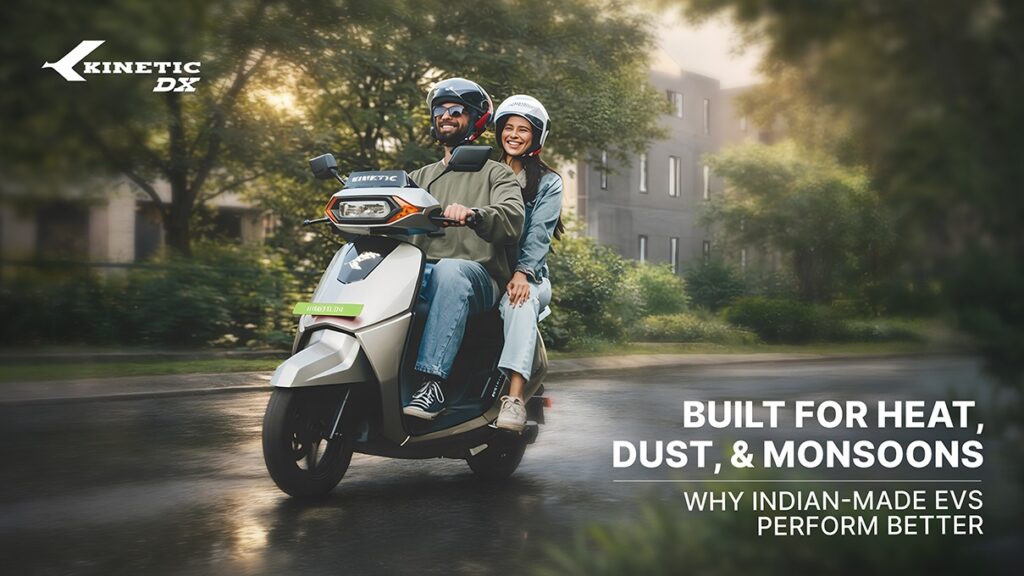
Constructing vehicles in India is a challenging endeavor. Our summers regularly push past 45°C, dust settles into places you didn’t know existed, and when the monsoon arrives, roads can transform within minutes. These conditions don’t just test drivers — they test the machines we rely on every day. As electric vehicles steadily become the preferred choice for eco-conscious and cost-aware commuters, a natural question often arises: Can EVs truly handle India’s extreme weather?
The short answer is yes, especially when they are engineered with Indian conditions in mind.
Designed for the Reality of Indian Summers
Heat is perhaps the biggest concern for prospective EV owners. In cities like Delhi, Jaipur, and Nagpur, soaring temperatures can make
anyone wonder how a battery-powered vehicle copes. Most modern electric scooters, including those developed by Kinetic, are powered by Lithium Iron Phosphate (LFP) batteries, a chemistry increasingly recognized for its thermal stability and durability. Batteries are naturally sensitive to temperature. In very high heat, the chemical reactions inside them can accelerate. But this is precisely where well-engineered battery systems make a difference. Quality LFP batteries are designed to manage thermal stress, maintain performance, and prioritize rider safety.
Simply put, the technology is built not just to function, but to endure.
Why LFP Batteries Are a Game Changer
Not all EV batteries are created equal. LFP batteries have emerged as a strong choice for markets like India because they strike a careful balance between safety, longevity, and reliability.
They are known for:
- Higher thermal stability, which reduces the risk of overheating
- Longer lifecycle, meaning fewer battery replacements over time
- Consistent performance, even in demanding climates
- Enhanced safety, thanks to their robust chemical structure
For riders, this translates into something refreshingly simple, more peace of mind, more savings over the long run, and far less day-to-day worry.
When the Rains Arrive
If summer raises questions about heat, the monsoon often brings concerns around water exposure. Here again, modern EVs are built with real-world conditions in mind. Waterproof battery packs, sealed electrical components, and carefully engineered layouts help ensure that rain does not compromise safety or performance. The truth is, a well-designed electric scooter is just as dependable in the monsoon as it is under clear skies. Much like any vehicle, sensible riding and basic precautions go a long way, but the machine itself is prepared for the season.
Built for More Than Weather
Indian roads present challenges beyond temperature and rainfall. Dust, uneven terrain, and dense traffic demand resilience from any vehicle expected to perform day after day. This is where locally engineered EVs hold a quiet advantage. Vehicles designed and tested in Indian environments are far more attuned to these realities than those adapted from milder geographies. For a brand like Kinetic, one that has spent decades understanding how India moves, this insight shapes the approach to electric mobility as well. The focus is not merely on adopting new technology, but on ensuring it works seamlessly within the rhythms of Indian life.
A Shift Driven by Responsibility
Across Indian cities, declining air quality has become difficult to ignore. Severe AQI levels serve as a constant reminder that mobility must evolve responsibly. At the same time, rising temperatures and growing resource pressures are placing greater accountability on the vehicle sector to create cleaner, more sustainable solutions. Electric vehicles are increasingly part of that answer. Every emission-free ride contributes, in its own small way, toward healthier urban spaces.
Confidence for the Road Ahead
Transitioning to electric is no longer just about innovation; it is about readiness. Riders want assurance that their vehicles can handle the same environments they do. When EVs are thoughtfully engineered, equipped with dependable battery technology, and built with local conditions in mind, they prove themselves capable companions through heatwaves, heavy rains, and everything in between.
India demands resilience. And the new generation of Indian-made electric vehicles is rising confidently to meet that demand. Because the future of mobility here isn’t being designed for perfect conditions, it’s being built for the real ones.

