Removing a heavy ceiling fixture is never a simple task. Chandeliers, multi-tier pendants, and ornate lighting carry significant weight, and the slightest misstep can cause damage to the fixture, the ceiling, or even the people in the room. Success begins with preparation, assessment, and a clear understanding of both structural and electrical considerations.
Assessing the Fixture and Ceiling
Before touching a single screw or wire, the first step is to evaluate the fixture and the mounting surface. A heavy chandelier does not simply hang from a ceiling hook. It is supported by structural fixings that distribute weight across joists or reinforced points.
Understanding the type of ceiling is essential. Timber joists may require direct attachment points, whereas concrete slabs often need expansion anchors or chemical fixings. Plasterboard alone is never sufficient for load-bearing. The installer must also confirm the total weight of the fixture, including decorative elements like crystals, glass, or metal components, to plan the lifting and lowering process safely.
High ceilings or fixtures in complex spaces add another layer of difficulty. Access platforms or ladders must be stable and appropriate for the height. Trying to improvise at this stage increases the risk of accidents and damage.
Disconnecting the Electrical Supply
Electricity is a silent hazard in fixture removal. The circuit must be fully isolated before any work begins. For older installations, wiring can be brittle, and insulation may be compromised over time.
Careful inspection of connections is necessary to ensure there is no tension or wear that could cause a short or spark. Even when the fixture is partially dismantled, proper earthing and secure connectors are required before fully detaching it. Checking the circuit and ensuring correct isolation are steps that cannot be skipped.
Step-by-Step Detachment Techniques
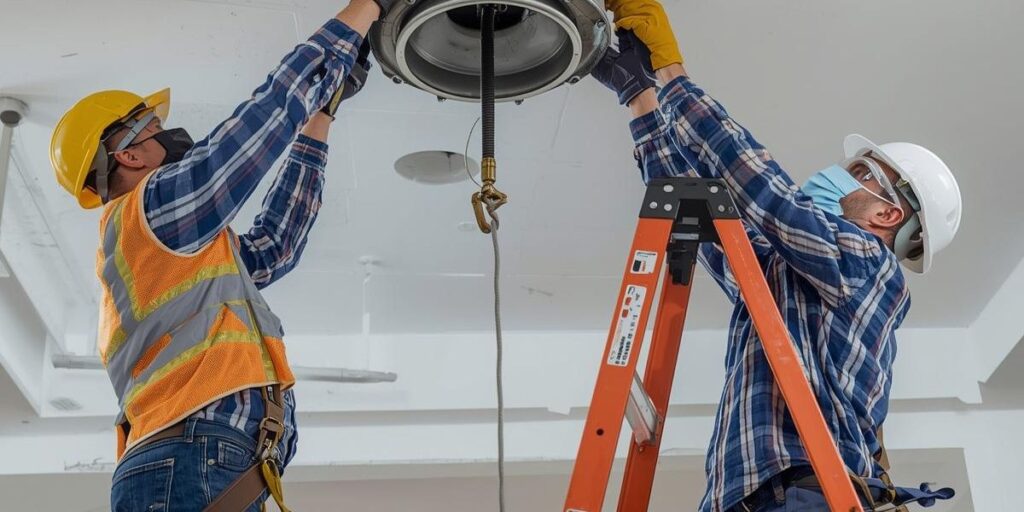
Heavy ceiling fixtures should never be handled by a single person. Coordinated lifting is essential to prevent twisting or strain on the frame. In many cases, removing decorative elements, such as crystals or panels, before lowering the main frame reduces weight and simplifies handling.
When lowering a chandelier, the following techniques are often employed:
- Support from multiple points: Using ropes or chains to stabilize the fixture while fixings are undone.
- Gradual unfastening: Loosening screws and brackets in a controlled sequence to prevent sudden shifts.
- Partial dismantling: Removing detachable parts to lighten the load.
- Temporary bracing: Installing temporary supports to carry the weight while disconnecting electrical wiring.
For complex or particularly heavy fittings, professional chandelier removal in London ensures these steps are carried out safely. Coordinated handling, correct use of lifting equipment, and knowledge of weight distribution prevent damage to both the fixture and the surrounding property.
Protecting the Property
A careful removal is not just about preserving the chandelier. Floors, furniture, and walls must be protected from impact, dust, and debris. Drop cloths and protective coverings are standard practice in high-value residential and commercial properties.
In heritage or delicate settings, additional precautions may be required. Ornate plasterwork, cornices, or ceiling roses can be easily damaged if care is not taken. The objective is to remove the fixture with zero impact to the surroundings while maintaining structural integrity.
Reassessing Mounting Points
Once the fixture is removed, it is an opportunity to inspect the ceiling fixings. Any damage to joists, anchors, or electrical junctions should be addressed before a replacement is installed. For larger fittings, this stage also allows load testing or reinforcement to prepare for a new installation.
Even small signs of wear or loosened fixings can compromise the safety of a future fixture. Taking the time to reassess ensures that when the chandelier or pendant is reinstalled, it will hang securely and meet safety standards.
Handling and Storage After Removal
After detachment, handling the fixture carefully is essential to prevent cosmetic or structural damage. Components should be transported in padded containers or secured with soft cloths. Crystals, glass panels, and delicate finishes are particularly vulnerable to scratches or chips if mishandled.
Proper labeling and partial disassembly make reinstallation smoother. Keeping screws, brackets, and decorative elements organized prevents confusion and reduces the risk of damaging the fixture during storage.
Professional Care for High-Value Lighting
Removing a heavy ceiling fixture is a task that demands precision, planning, and respect for both the property and the lighting. Professionals handle every step with care, from evaluating the structure and isolating electrical circuits to carefully lowering the fixture and protecting the surrounding space.
For properties across London, Royale Chandeliers Ltd offers safe removal, cleaning, repair, and reinstallation of chandeliers and other large ceiling fixtures. They are fully insured, experienced in handling high-value and delicate lighting, and meticulous about protecting floors, walls, and ceilings throughout every project. Their team combines technical knowledge with careful handling to ensure both the fixture and the property remain uncompromised.
Contact them to discuss your requirements and obtain a detailed quotation.