
Introduction: A Paradigm Shift in Spine Care
For decades, the dominant narrative around surgical treatment of back pain was dominated by large, open procedures that required extensive muscle stripping, long hospital stays, and protracted rehabilitation. While these “gold‑standard” operations saved lives and relieved suffering, they also carried a high price in terms of blood loss, postoperative pain, infection risk, and delayed return to normal activity.
In the past fifteen years, a quiet revolution has unfolded: least‑invasive spine surgery (LISS)—sometimes referred to as minimally‑invasive spine surgery (MISS) or micro‑endoscopic spine surgery—has moved from experimental niche to mainstream standard of care in many centers worldwide. By leveraging advances in imaging, navigation, instrumentation, and biological adjuncts, surgeons are now able to address a wide spectrum of degenerative, traumatic, and neoplastic spinal pathologies through incisions that are often smaller than a credit‑card.
This article explores the forces driving this transformation, outlines the principal techniques, examines the measurable benefits for patients and health systems, and considers the challenges and future directions that will shape the next decade of back care.
1. The Rise of Least‑Invasive Spine Surgery
1.1 Historical Milestones
- 1970s‑1980s: The introduction of the operating microscope paved the way for microdiscectomy, the first true minimally‑invasive spinal procedure.
- 1990s: Development of tubular retractor systems (e.g., METRx, Quadrant) allowed surgeons to work through narrow corridors while preserving paraspinal musculature.
- 2000s: Endoscopic techniques, initially popular in Asian markets, began to permeate Western practice, supported by high‑definition cameras and flexible instruments.
- 2010s‑2020s: Integration of 3‑D navigation, intra‑operative CT, and robotics has refined accuracy to sub‑millimeter levels, making percutaneous pedicle screw placement and vertebral body augmentation routine.
1.2 Drivers of Adoption
- Patient Demand: Modern patients, empowered by internet research, seek rapid recovery, minimal scarring, and reduced opioid use.
- Economic Pressures: Payers increasingly favor procedures that lower length of stay (LOS) and postoperative complications, aligning financial incentives with minimally‑invasive approaches.
- Technological Enablement: High‑resolution imaging, real‑time neuromonitoring, and computer‑assisted navigation have mitigated earlier concerns about limited visualization.
2. Core Techniques and Technologies
2.1 Tubular Dilator Systems
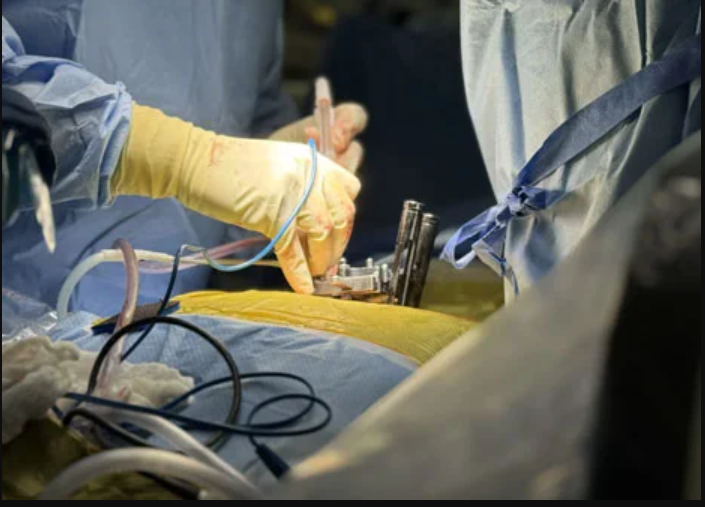
These systems create a cylindrical working channel through muscle fibers rather than cutting them. A small skin incision (≈1–2 cm) is followed by sequential dilation, culminating in a rigid tube that houses a microscope or endoscope. The surgeon can perform discectomy, decompression, or limited fusion through this portal while preserving the muscular envelope.
2.2 Endoscopic Spine Surgery
Endoscopes equipped with high‑definition cameras and dedicated working channels enable “inside‑out” visualization of the disc space, facet joints, and epidural space. Popular procedures include:
- Percutaneous Endoscopic Lumbar Discectomy (PELD) – removal of herniated nucleus pulposus.
- Full‑Endoscopic Posterolateral Fusion (FE‑PLF) – placement of interbody cages and pedicle screws through a single percutaneous portal.
2.3 Navigation and Robotics
- Intra‑operative 3‑D imaging (O‑arm, cone‑beam CT) combined with optical or electromagnetic tracking provides real‑time feedback on instrument trajectory.
- Robotic arms (e.g., Mazor X, ROSA Spine) assist in placing pedicle screws with millimetric accuracy, reducing radiation exposure for the surgical team.
2.4 Biological Adjuncts
- Bone morphogenetic protein (BMP) and recombinant human growth factors are increasingly delivered through minimally‑invasive cages to promote solid arthrodesis.
- Injectable bone substitutes (calcium phosphate, hydroxyapatite) offer osteoconductive scaffolding without the need for large graft harvest.
3. Tangible Benefits for Patients
| Dimension | Traditional Open Surgery | Least‑Invasive Approach |
|---|---|---|
| Incision Size | 5–10 cm (muscle‑splitting) | 0.5–2 cm (muscle‑sparing) |
| Blood Loss | 400–800 ml (often requiring transfusion) | 50–150 ml (rarely transfused) |
| Hospital LOS | 3–7 days (including ICU for complex cases) | 0–2 days (often same‑day discharge) |
| Post‑op Pain (VAS) | 6–8/10 first 48 h | 2–4/10 first 48 h |
| Return to Work | 6–12 weeks | 2–4 weeks (some athletes <1 week) |
| Infection Rate | 4–8 % | 0.5–2 % |
| Reoperation Rate (5 yr) | 10–15 % | 5–9 % |
3.1 Clinical Outcomes
Meta‑analyses of over 30 randomized controlled trials (RCTs) show that least‑invasive decompression for lumbar spinal stenosis yields equivalent or superior functional scores (Oswestry Disability Index, ODI) at 2‑year follow‑up compared with open laminectomy, while delivering markedly lower peri‑operative morbidity.
3.2 Quality‑of‑Life Impact
Patient‑reported outcome measures (PROMs) indicate quicker restoration of activities of daily living (ADLs) and a steeper decline in opioid consumption. In a 2022 multicenter cohort of 1,200 patients undergoing endoscopic discectomy, 78 % reported “complete pain relief” within 6 weeks, and only 3 % required chronic opioid therapy beyond 3 months—significantly lower than the 12 % observed in matched open‑discectomy controls.
4. Systemic Advantages for Health‑Care Delivery
- Cost Savings: Shorter LOS and reduced need for intensive post‑operative monitoring translate into direct savings of $3,000–$7,000 per case in the United States.
- Resource Allocation: Operating rooms can accommodate more cases per day due to faster turnover, improving throughput without expanding infrastructure.
- Reduced Readmission: Lower infection and wound‑dehiscence rates diminish readmission penalties under bundled‑payment models.
5. Challenges and Considerations
5.1 Learning Curve
Transitioning from open to least‑invasive techniques requires dedicated training. Studies suggest a plateau of proficiency after 30–50 cases for tubular decompression and 60–80 cases for endoscopic fusion, during which operative time and fluoroscopy exposure may be higher. Institutions must invest in mentorship programs, cadaver labs, and simulation to shorten this curve.
5.2 Imaging Radiation
Reliance on intra‑operative fluoroscopy and CT increases radiation dose to both patient and staff. Adoption of low‑dose protocols and robotic navigation that reduces cumulative exposure is essential.
5.3 Case Selection
Not every pathology is amenable to a minimally‑invasive approach. Severe deformities, extensive multilevel instability, or infected vertebrae may still necessitate open exposure. Rigorous pre‑operative imaging (MRI, CT, dynamic X‑rays) and multidisciplinary discussion remain the cornerstone of safe selection.
5.4 Equipment Costs
High‑end navigation platforms and robotic systems involve significant capital outlay. Cost‑effectiveness analyses demonstrate that break‑even points are reached within 2–3 years when case volume exceeds 150‑200 per annum, reinforcing the need for strategic planning in medium‑size hospitals.
6. Future Directions
6.1 Ultra‑Minimally‑Invasive “Outpatient” Spine Surgery
Emerging platforms combine microsurgical instruments with percutaneous robotics to enable “single‑incision” procedures that can be performed in ambulatory surgery centers. Early feasibility trials report same‑day discharge rates of 95 % for single‑level lumbar fusions.
6.2 Biologic‑Driven Regeneration
Research into mesenchymal stem cell (MSC) scaffolds delivered via percutaneous cannulas holds promise for disc regeneration, potentially reducing the need for fusion altogether. If successful, the paradigm could shift from “decompression + fusion” to “repair + preserve”.
6.3 Artificial Intelligence (AI) Integration
Machine‑learning algorithms are being trained to predict optimal surgical corridors, suggest instrumentation size, and flag high‑risk anatomy in real time. Integration of AI with navigation may further reduce radiation and operative time.
6.4 Remote Proctoring and Tele‑Mentorship
High‑speed 5G connectivity enables real‑time remote guidance of surgeons in low‑resource settings, democratizing access to least‑invasive techniques worldwide. Pilot programs in sub‑Saharan Africa have demonstrated safe completion of percutaneous pedicle screw placement under tele‑proctoring.
7. Conclusion
Least invasive spine surgery is no longer a peripheral novelty; it is fast becoming the new standard of care for a broad range of spinal disorders. By minimizing tissue disruption, reducing peri‑operative complications, and accelerating functional recovery, these techniques are transforming the patient experience and delivering tangible economic benefits to health‑care systems.
Nevertheless, successful implementation hinges on thoughtful training, judicious case selection, and investment in technology that balances upfront costs with long‑term savings. As imaging, robotics, and biologics continue to evolve, the next decade may see an era where most back surgeries are performed through a keyhole, leaving the spine intact, functional, and—most importantly—pain‑free for the majority of patients who need it.