
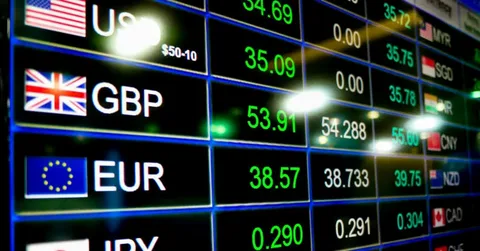
So you wanna trade like a pro? Well, one thing most beginners totally miss is how professional traders use currency cross rates to find better opportunities in the forex market. These are currency pairs that don’t involve the US dollar — and trust me, they can be super powerful if you know how to use them right.
In this article, i’m gonna walk you through 5 real strategies that experienced traders actually use. Whether you’re just getting started or you’ve been trading for a while, this stuff is gonna be helpful. Let’s get into it
What Are Currency Cross Rates and Why Should You Care?
Okay so before we jump into strategies, let me quickly explain what currency cross rates actually are. Basically, when two currencies are paired together without the US dollar being involved — like EUR/GBP or AUD/JPY — that’s a cross rate. Most beginner traders only focus on major pairs like EUR/USD or GBP/USD, but professional traders? They watch crosses too.
Why? Because crosses often show cleaner trends and less noise. Also, they can give you a better picture of what’s really happening between two economies.
If you wanna track these in real-time, platforms like Vunelix make it super easy. They got live forex rates for 2000+ currency pairs, including crosses, so you always know what the market is doing.
5 Strategies Professionals Use With Forex Cross Pairs
1. Triangular Arbitrage — The Math Trick
This one sounds complicated but hear me out. Triangular arbitrage is when a trader notices a small pricing difference between three currency pairs and uses it to make a profit.
Like, imagine:
- EUR/USD = 1.10
- USD/JPY = 150
- EUR/JPY = 164 (but it should be 165 based on the other two)
That small gap? That’s where the opportunity is. Pro traders use tools that calculate these differences automatically and then place trades really fast.
It’s not something you’ll do manually easily, but understanding it helps you see how cross pair pricing works behind the scenes.
2. Carry Trade Using Cross Pairs
The carry trade is honestly one of the most popular strategies among big institutional traders. The idea is simple — borrow money in a currency with low interest rates and invest it in one with higher rates.
Cross pairs like AUD/JPY are classic carry trade pairs because:
- Japan has had very low interest rates for years
- Australia tends to have higher rates
So traders go long on AUD/JPY, collect the interest rate difference (called the “swap”), and hope the pair moves in their favor too. It’s like getting paid while you wait.
Not risk-free obviously. If market sentiment turns negative, these trades can unwind fast.
3. Trend Following on EUR/GBP and Other European Crosses
A lot of professional traders love to use trend-following strategies on European cross pairs like EUR/GBP, EUR/CHF, or GBP/CHF. These pairs are closely tied to economic news from the eurozone and UK, so when there’s a clear trend forming, it can last for weeks.
The strategy here is pretty basic:
- Identify the trend using moving averages or price action
- Wait for a pullback to enter
- Ride the trend until it shows signs of reversing
Simple? Yes. But it works because these cross rates reflect real economic differences between countries, not just dollar movements.
4. News Trading Around Central Bank Decisions
When the European Central Bank, Bank of England, or Bank of Japan makes a rate decision, the cross pairs move — a lot. Pro traders watch these events closely and position themselves before or right after the news drops.
For example, if the ECB raises rates but the Bank of England keeps rates the same, EUR/GBP is probably going up. Traders who understood that relationship would’ve made good money.
To do this properly you need:
- An economic calendar (so you know when big events are)
- Real-time rates so you can react fast
- A clear plan so you don’t panic trade
Vunelix.com has market tools and data that help with this — their real-time data is sourced from central banks and leading financial institutions, which is exactly what you need for this kind of trading.
5. Correlation Trading Across Currency Pairs
Here’s something most beginners don’t know — different currency pairs are correlated with each other. Meaning, when one moves, another often moves in a similar or opposite direction.
For example:
- EUR/USD and USD/CHF tend to move in opposite directions
- AUD/USD and NZD/USD often move together
Professional traders use these correlations to confirm trade signals or hedge their positions. If you’re long on EUR/JPY but you notice USD/JPY is moving in a way that contradicts your trade, it might be a warning sign to exit.
Understanding cross exchange rates in this context helps traders manage risk way better than just looking at one pair alone.
Tools That Make All This Easier
Look, these strategies sound doable on paper but without the right tools, implementing them is really hard. You need:
- Live forex rates updated in real-time
- Historical data to backtest your ideas
- Market heatmaps to see what’s moving
- Currency converters and cross rate tables
That’s exactly what Vunelix offers — for free. It’s a real-time financial market data platform with charts, currency tools, market heatmaps, and screeners. They cover 2000+ forex pairs, 6000+ cryptocurrencies, and 50,000+ stocks from 30 countries. So whether you’re tracking cross pairs, watching crypto, or analyzing stocks — it’s all in one place.
What’s cool is they collect their data from exchanges, central banks, and financial institutions all around the world. So the data quality is solid.
Common Mistakes Traders Make With Cross Pairs
Before i wrap up the strategies section, here’s a few things to avoid:
- Ignoring liquidity — some cross pairs have much lower volume than majors, so spreads can be wider
- Forgetting about correlations — not checking how pairs relate to each other can blow up a trade
- Overcomplicating it — you don’t need to use all 5 strategies at once. Pick one, learn it well
- Not checking the economic calendar — news events hit cross pairs hard, so always be aware of what’s coming
Final Thoughts on Currency Cross Rates
So there you have it — 5 solid strategies that professional traders actually use when dealing with currency cross rates. From carry trades to correlation analysis, these approaches aren’t just theory — they’re things real traders do every day.
The key is to start with one strategy, practice it, and build from there. And always make sure you’re using reliable, real-time data. That’s where something like Vunelix comes in handy — it gives you the tools you need without any cost.
Don’t sleep on cross pairs. They might just be the edge you’ve been looking for.
FAQs
What are currency cross rates in simple terms?
Currency cross rates are forex pairs that don’t include the US dollar. Examples include EUR/GBP, AUD/JPY, or EUR/CHF. They show the exchange rate between two non-dollar currencies directly.
Are cross currency pairs good for beginners?
They can be a bit trickier than major pairs because liquidity is sometimes lower. But once you understand how forex works, cross pairs can actually offer cleaner trends and less dollar-driven noise.
Where can I find real-time cross rate data for free?
You can check out Vunelix.com — it’s a free platform that provides real-time rates for 2000+ forex pairs including all major and minor cross pairs. No sign-up needed.
What is the most traded cross currency pair?
EUR/GBP, EUR/JPY, and AUD/JPY are among the most popular cross pairs. EUR/JPY in particular gets a lot of attention because it combines two major economic zones — the eurozone and Japan.
How do cross rates affect international trade?
Businesses that operate across multiple countries use cross exchange rates to figure out costs and pricing when US dollars aren’t involved in the transaction. It helps them manage currency risk more directly.
Is carry trading with cross pairs risky?
Yes, it can be. Carry trades work great in stable markets but can unwind quickly during risk-off events. Always use proper risk management and don’t overleverage.
Can I use Vunelix for historical data on cross pairs?
Yes! Vunelix has access to over 30 years of historical currency exchange data, which is great for backtesting your cross rate strategies before risking real money.